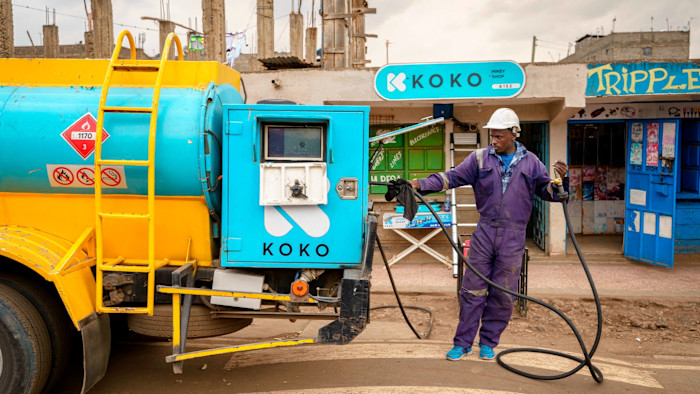
Kenya is bracing for a fresh legal showdown with the World Bank Group that could leave taxpayers footing a Sh23 billion compensation bill linked to the collapse of clean cooking startup Koko Networks, a firm insured by the multilateral lender.
Koko has shut down its Kenyan operations and is teetering on insolvency following a fallout with the government over carbon credit sales. The dispute centres on the State’s failure to issue letters of authorisation required for the company to sell carbon credits in compliance markets, effectively cutting off a key revenue stream and pushing the business to the brink.
Under an agreement with the World Bank’s Multilateral Investment Guarantee Agency (Miga), which provides political risk insurance, Kenya is legally obliged to compensate investors if government actions obstruct or interfere with commercial activity. Koko is expected to lodge a claim with Miga, accusing the government of breaching contractual commitments. In March last year, Miga insured Koko’s investment to the tune of $179.6 million, equivalent to Sh23.1 billion, marking the world’s first political insurance cover tied directly to carbon credits. The policy explicitly includes protection against government breach of contract.
Miga is now expected to press Kenya to honour that guarantee. When providing insurance for Koko’s projects in Kenya and Rwanda, the agency sought to curb potential misuse by requiring host governments to commit to compensating investors if they were found to have frustrated carbon credit trading. A 2024 letter of authorisation template from Miga states that governments must compensate investors for losses arising from any failure to meet such commitments, with compensation calculated fairly, transparently, and in line with market values and estimated revenue losses.
Over the weekend, Koko confirmed to the Financial Times that it had begun an “orderly wind-down process” in coordination with administrators and major creditors.
The impasse has reignited doubts about the sustainability of the cookstove financing model and risks denting Kenya’s standing as a destination for green investment. Koko has poured roughly $300 million into its operations, about half of which went into building infrastructure to supply bioethanol to nearly 1.5 million low-income urban households. Its backers include the Microsoft Innovation Fund, Mirova, and Rand Merchant Bank. The company sold cooking stoves and fuel at subsidised rates through a partnership with Vivo Energy, offsetting losses by selling carbon credits.
Demand for such credits is strong, particularly from the aviation sector under a scheme overseen by the International Civil Aviation Organization. These compliance-market credits fetch about $20 each, up to ten times the price typically seen in voluntary markets. Koko’s credits are based on estimates of avoided deforestation and emissions achieved when households switch from charcoal to sugarcane-derived bioethanol.
In June 2024, Kenya signed an investment framework agreement with Koko allowing it to sell credits under Article 6 of the Paris Agreement. The deal affirmed Koko’s ownership of the credits, its right to transfer them freely to partners, and the government’s pledge not to resell them. Despite this, the State is reported to have withheld the letters of authorisation needed to finalise sales.
Also Read: Starlink Competitor Spacecoin Eyes Anti-Censorship Alliance to Circumvent Internet Shutdowns
By December 2023, Koko said it had issued around 2.45 million tonnes of carbon credits from its Kenyan operations, with proceeds largely used to subsidise cookstoves and fuel. Carbon credits represent permission to emit one tonne of carbon dioxide or equivalent gases and are generated through activities such as clean cooking projects or reforestation.
In November 2024, Miga rolled out a standard authorisation template for governments and private investors seeking access to compliance markets under Article 6. One section addresses how host governments earn fees, including upfront payments at project registration and a share of revenues from credit sales. Once credits are certified, governments are required to recognise them as valid, forfeiting the right to challenge their quality later.
Koko’s model relied heavily on this structure. The firm supplied subsidised stoves and fuel to low-income households in Kenya and Rwanda, banking on carbon credit sales to balance the books. The credits were independently certified by Gold Standard.
At its peak, Koko served about 1.5 million customers in Kenya alone, employed at least 650 staff directly, and worked with thousands of agents operating more than 3,000 automated refuelling points nationwide. Its exit now exposes the State to a potentially hefty breach-of-contract claim that could see public funds used to compensate the insurer.
Over the past 30 years, Miga has backed at least 23 projects in Kenya, including Grain Bulk Handlers at the Port of Mombasa, Kibos Sugar and Allied Industries, Resolution Health East Africa, Globeleq, and AMEA Power. The Koko case may yet prove one of the most expensive.