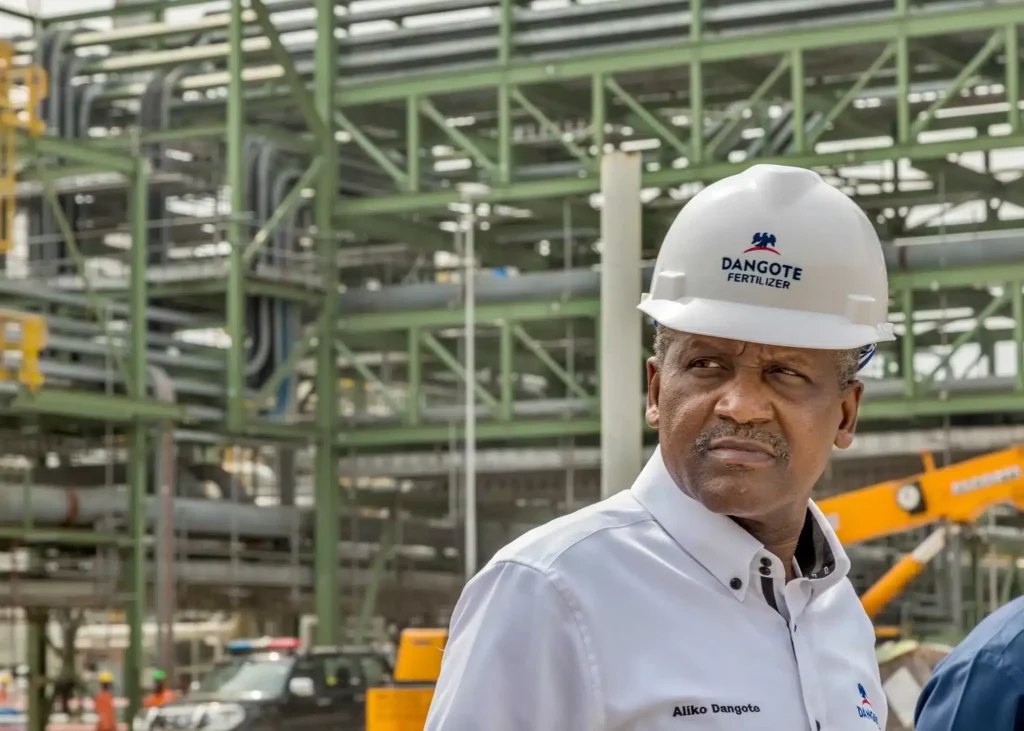
Aliko Dangote is preparing to make history with plans to list his refinery business across several African stock exchanges at once, in what would be the continent’s first-ever pan-African initial public offering and potentially its largest capital raise to date.
The cross-border listing structure was confirmed by Frank Mwiti of the Nairobi Securities Exchange following high-level talks in Lagos involving multiple African bourses. The deal is being advised by Stanbic IBTC Capital, Vetiva Advisory Services, and FirstCap.
The IPO will likely involve the sale of between 5% and 10% of Dangote Petroleum Refinery and Petrochemicals FZE, with analysts valuing the business at roughly US$40 billion to US$50 billion. The share sale could raise as much as US$5 billion, setting a new benchmark for African capital markets.
A primary listing is expected on the Nigerian Exchange Group between June and July 2026, followed by secondary listings on participating African exchanges. Discussions among regulators and exchange leaders have largely focused on easing cross-border trading and regulatory hurdles to make the ambitious structure workable.
The refinery itself, located in Lagos, is the world’s largest single-train facility, capable of processing 650,000 barrels per day. Built at a cost of US$20 billion, it reached full capacity in early 2026, with the Nigerian National Petroleum Corporation holding a 7.25% stake.
Also Read: Vivo, TotalEnergies and Rubis Market Share Slips Below 50% as Competition Heats Up
In a rather clever twist, the IPO will allow investors to buy shares in naira while receiving dividends in US dollars, backed by projected export revenues of over US$6 billion annually. The structure, though innovative, still requires regulatory approval.
The group is also juggling a debt load of about US$3.65 billion, which it plans to clear through operations and asset deals, while pursuing an ambitious expansion strategy to double capacity to 1.4 million barrels per day within three years.
If the listing lands at the upper end of expectations, it could significantly boost the Nigerian Exchange’s market capitalisation and even help restore its position in global frontier market indices. Still, questions linger about whether the relatively small portion of shares on offer will provide enough liquidity across multiple exchanges.
Meanwhile, the refinery is already reshaping fuel supply across Africa, exporting products to countries such as Ghana, Cameroon, Togo, and Tanzania, and gradually easing the continent’s reliance on imports from Europe and the Middle East.