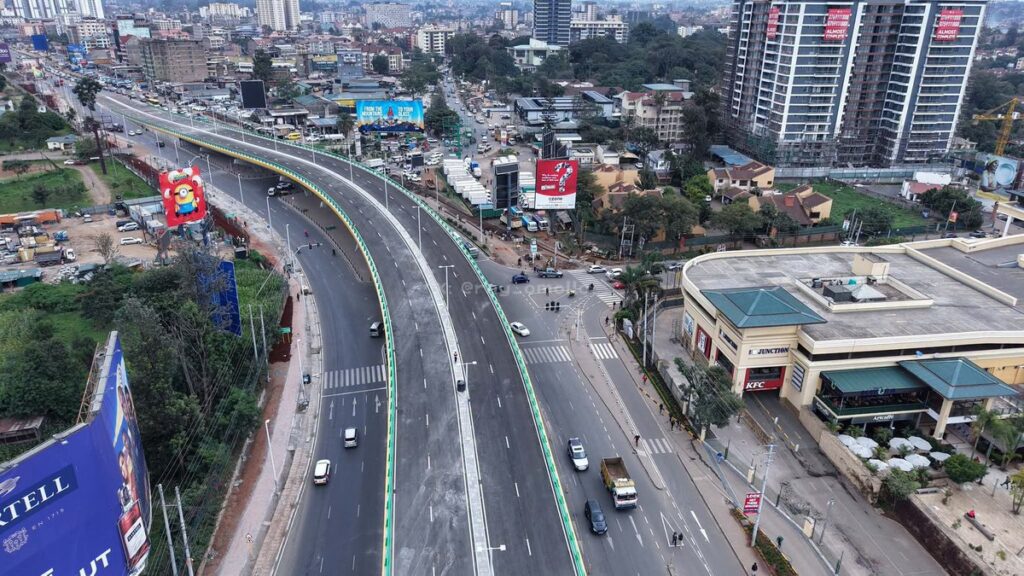
Kenya has launched a major procurement process that pits South Korean companies against each other for a contract worth approximately Sh11 billion to implement an intelligent transport system in Nairobi. The initiative forms part of renewed efforts to ease traffic congestion and reduce dependence on manual traffic management by police officers at key intersections across the city.
The Kenya Urban Roads Authority (Kura) has limited participation in the tender to firms from South Korea, in line with conditions tied to an $83.8 million (Sh10.8 billion) loan provided through South Korea’s Economic Development Cooperation Fund. The financing will support the second phase of Nairobi’s Intelligent Transport System project.
The contract covers the installation of smart traffic lights, automated Vehicle Enforcement Systems (VES), closed-circuit television cameras, vehicle detection technology, and Variable Message Signs (VMS) along major transport corridors within the capital.
According to tender documents released by Kura, the selected contractor will be required to complete the design, construction, commissioning and testing of the system within 30 months from the start date.
Also Read: BRS Introduces Stricter Verification Measures to Combat Fraud in Company Records
In addition, the winning firm will be expected to provide technical experts for four years after project completion to support operations and help ensure the long-term sustainability and maintenance of the system.
The project is intended to address Nairobi’s persistent traffic challenges, which continue to result in lengthy commuting times and significant economic losses due to reduced productivity.
A key component of the initiative is the introduction of an automated traffic enforcement network capable of detecting and recording violations without the need for officers to be physically present. The Vehicle Enforcement Systems will monitor offences such as blocking intersections, running red lights and breaching lane discipline rules, all of which contribute significantly to congestion.
Authorities expect the technology to improve adherence to traffic regulations while allowing traffic police to focus on other duties rather than manually directing vehicles at heavily congested junctions.
Beyond technology upgrades, the project also includes the redesign and modernisation of 60 intersections to enhance traffic flow and accommodate increasing vehicle volumes. Infrastructure improvements will feature the construction of a new bridge and the expansion of two existing bridges to eliminate bottlenecks at strategic locations across the city.