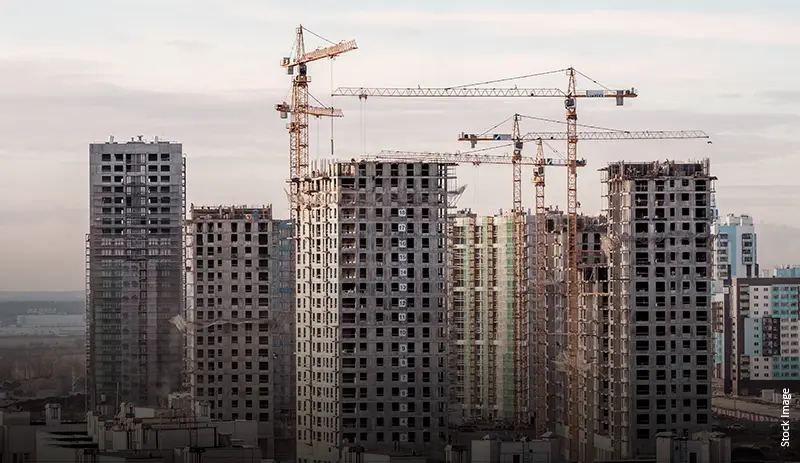
Private developers are increasingly channelling investment into commercial real estate projects as the government intensifies its affordable housing agenda, triggering a noticeable shift in Nairobi’s construction sector and reducing the traditional dominance of residential developments.
Commercial developments, which include office blocks, warehouses, retail centres and industrial facilities, recorded strong growth during the first quarter of 2026. Data from Nairobi City County, published by the Kenya National Bureau of Statistics (KNBS), shows that the value of approved non-residential building plans rose by 44.4 per cent to Sh21.37 billion between January and March 2026, up from Sh14.8 billion during the same period last year.
The surge in commercial construction helped cushion the market against a decline in residential projects. Approved residential developments fell by 10.3 per cent to Sh41.06 billion from Sh45.77 billion recorded in the first quarter of 2025.
Despite the slowdown in housing developments, the overall value of approved building plans in Nairobi increased by 3.1 per cent to Sh62.44 billion, marking the highest quarterly level since the opening quarter of 2023, when approvals stood at Sh63.78 billion.
The figures highlight a growing preference among private investors for commercial property ventures at a time when the government is significantly expanding its role in the residential housing market through President William Ruto’s Affordable Housing Programme.
Commercial developments accounted for 34.2 per cent of the total value of approved projects during the first quarter of 2026, compared to 24.4 per cent a year earlier and just 9.3 per cent in the corresponding period of 2023. The rising share underscores the rapid expansion of business-oriented real estate within the capital.
Meanwhile, the government continues to scale up investment in affordable housing as part of efforts to bridge the country’s housing shortage, create employment opportunities and stimulate economic growth.
In his Budget Statement delivered on June 11, Treasury Cabinet Secretary John Mbadi said the administration had accelerated implementation of the housing programme, describing adequate housing as a key pillar of social and economic development.
He noted that the initiative not only seeks to provide affordable homes for Kenyans but also supports employment directly through construction activities and indirectly through demand for building materials and related services.
The Affordable Housing Programme primarily targets low- and middle-income households through tenant-purchase arrangements and accessible mortgage financing under the Boma Yangu initiative.
According to the Treasury, 277,281 housing units had either been completed or were under construction nationwide by May 2026, demonstrating the scale of government involvement in the housing sector. More than one million Kenyans have also registered on the Boma Yangu platform, reflecting growing demand for home ownership and increasing public confidence in the programme.
Also Read: Kenya Leads Africa in Sports Betting Participation, New Survey Shows
Government expenditure on housing has risen sharply since the introduction of the housing levy in July 2023. Data contained in the 2026 Economic Survey shows actual spending on housing nearly tripled to Sh79.03 billion in the financial year ending June 2025, up from Sh25.49 billion the previous year. This was also substantially higher than the Sh9.13 billion spent during the 2022/23 financial year before the levy was introduced.
The report further indicates a significant improvement in the utilisation of allocated housing funds. Absorption rates climbed to 96.3 per cent of the Sh79.03 billion allocation in the year ending June 2025, compared to 32.6 per cent of the Sh78.18 billion allocated in the preceding financial year.
KNBS attributed the rise in expenditure to improved utilisation of public funds and the accelerated rollout of affordable housing projects across the country.
The government’s aggressive investment in housing comes as many private residential developers remain cautious amid rising construction costs, high borrowing expenses and concerns over consumers’ purchasing power.
Although residential developments continue to account for the largest share of Nairobi’s construction pipeline, commercial real estate is currently experiencing the fastest growth, signalling a gradual shift in private-sector investment away from housing projects and towards business-oriented developments.