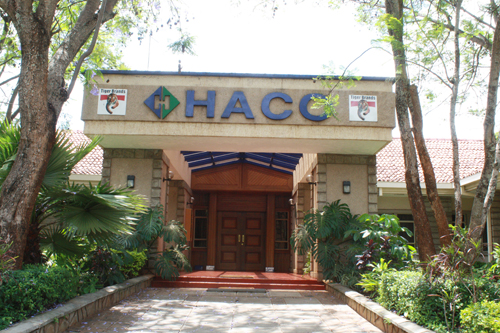
HACO Industries Managing Director Marianne Musangi has described the company’s near collapse following the loss of a key international licensing deal as a turning point that underscored the urgency for Africa to build stronger, self-sustaining industries, regional value chains, and locally owned brands.
Speaking during a high-level discussion on trade, investment, and industrialisation, Musangi noted that African firms remain exposed when they rely heavily on multinational partners whose global priorities can shift without regard for local operations.
In 2019, global stationery company Bic opted not to renew its manufacturing licence with HACO Industries, a partnership that had accounted for nearly 70% of the Kenyan firm’s business.
Founded in 1974 by Kenyan businessman Dr Chris Kirubi, the company responded by pivoting away from dependence on foreign licensing arrangements and focusing on developing its own African consumer brands.
“We lost that revenue overnight. We had to rebuild and redefine the business,” Musangi said.
HACO now produces personal care products and has expanded its sourcing network across Africa, drawing raw materials such as jojoba oil from Egypt, argan oil from Tunisia, and shea and cocoa butter from Uganda and Ghana.
Musangi said this continental sourcing strategy has strengthened resilience, particularly during global disruptions such as the Covid-19 pandemic and recent geopolitical shocks affecting supply chains.
The company’s strategy is anchored on a broader African market outlook, with Musangi stressing the importance of intra-African trade and production linkages. HACO has also expanded into Ghana through partnerships formed during the Africa CEO Forum in 2022 and now benefits from African Continental Free Trade Area (AfCFTA) certification, which has significantly reduced import duties on raw materials.
She added that logistics remains one of the biggest barriers to regional trade, with shipping products across Africa still slow and costly due to fragmented systems and weak infrastructure.
Her comments align with wider industry findings showing that transport inefficiencies, rather than tariffs, are the main constraint on African SME competitiveness. High freight costs, long transit times, and regulatory delays continue to erode margins across key trade corridors such as Nairobi–Lusaka.
Studies have proposed shared logistics hubs, including a central warehouse in Lusaka, to help exporters consolidate shipments, reduce costs, and improve delivery efficiency under the AfCFTA framework.
Musangi also pointed to structural challenges such as expensive electricity in Kenya compared to other industrial hubs and the need for more affordable, long-term financing to support manufacturing growth across the continent.
She argued that Africa already has sufficient capital but lacks patient financing structures capable of supporting long-term industrial expansion.
Her remarks formed part of a wider industry dialogue involving global financial and energy stakeholders focused on accelerating Africa’s industrialisation and strengthening regional trade systems.