New powers granted under the Finance Act 2026 allow KRA to pursue employers and other levy defaulters for outstanding payments.
The Kenya Revenue Authority (KRA) is set to intensify enforcement against housing levy defaulters after new legal provisions gave it explicit powers to recover unpaid contributions.
The changes introduced through the Finance Act 2026 empower KRA to recover outstanding government fees, levies and charges using mechanisms similar to those applied in collecting unpaid taxes.
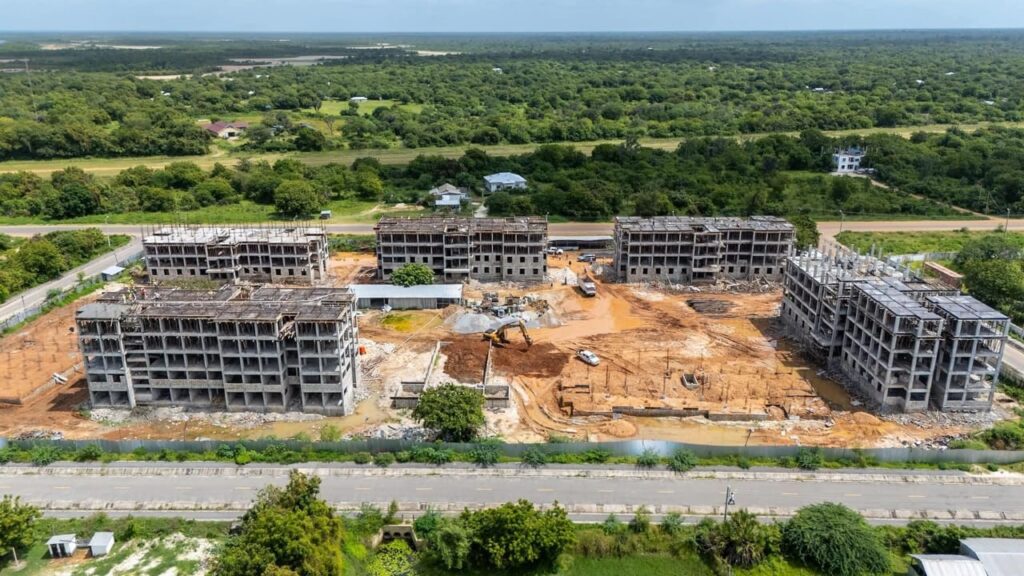
The Affordable Housing Fund has collected more than Sh200 billion since the levy was introduced. However, the Fund estimates that more than Sh100 billion remains unpaid or has been evaded.
The new enforcement framework affects employers, salaried workers, informal-sector workers and other contributors.
Who is required to pay the housing levy?
Under the Affordable Housing Act 2024, employers must deduct 1.5 per cent of an employee’s gross monthly salary and remit the amount to the Affordable Housing Fund.
Employers are required to make an additional 1.5 per cent contribution, bringing the combined contribution to 3 per cent of gross monthly earnings.
The levy also applies to people outside formal employment, including traders, self-employed people and other informal-sector workers, who are required to contribute 1.5 per cent of their gross income.
For employees and traders, the levy is applied to a single income source, meaning additional earnings from side businesses or other activities are not separately charged.
Why was the housing levy framework changed?
The original housing levy, introduced in July 2023, applied only to formally employed workers.
The arrangement faced legal challenges, with opponents arguing that requiring only formally employed Kenyans to contribute created unequal treatment.
The Court of Appeal subsequently suspended the levy for two months, disrupting collections during its first year.
Parliament later enacted the Affordable Housing Act 2024, expanding the contribution base to include informal-sector workers.
Collections resumed in March 2024 under the revised framework, which was intended to address concerns over unequal treatment while widening the funding base for the government’s affordable housing programme.
What was the problem with the previous enforcement system?
KRA has been responsible for collecting the housing levy on behalf of the government, with the proceeds channelled to the Affordable Housing Fund.
However, its collection mandate was not previously backed by equally explicit powers to recover unpaid housing levy through the enforcement mechanisms available for ordinary tax debts.
Also Read: NSE-Listed Firms Set to Pay Sh75bn in Dividends as Profits Rise
Before July 2026, KRA could collect the levy but did not have clear authority under the Tax Procedures Act to treat unpaid housing levy as an ordinary tax liability for recovery purposes.
What changed on July 1, 2026?
The Finance Act 2026 amended the Tax Procedures Act by introducing Section 39B.
The provision gives the KRA Commissioner-General authority to recover unpaid government fees, levies and charges as though they were unpaid taxes.
This means KRA can now deploy the recovery mechanisms provided under the Tax Procedures Act against individuals and businesses with outstanding housing levy obligations.
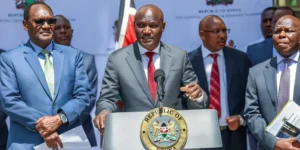
Housing Principal Secretary Charles Hinga said KRA had sought explicit legal authority before taking stronger enforcement action against defaulters.
According to Hinga, the authority can now assess and evaluate outstanding obligations and take enforcement or prosecution action against those who fail to remit the levy.
What can KRA do to recover unpaid housing levy?
The new provisions give KRA several avenues for recovering outstanding payments.
1. Recover money held by third parties
KRA can direct a third party holding money on behalf of a taxpayer to remit the funds directly to the authority.
This could include a bank, mobile money provider such as M-Pesa or a tenant. For instance, where a company has an outstanding housing levy debt and holds funds in a bank account, KRA can issue the appropriate notice requiring money to be applied towards the outstanding liability.
2. Seize movable property
KRA can also move to seize movable assets belonging to a defaulter. These may include vehicles, office equipment, machinery or stock.
If the outstanding debt is not settled within the prescribed period, the seized property may be sold to recover the amount owed.
3. Secure financial assets
The authority can issue instructions aimed at safeguarding financial assets and transaction accounts where necessary to prevent a taxpayer from transferring or dissipating funds before recovery.
4. Place a charge on property
KRA can place a charge or security notation against land or other immovable property belonging to a defaulter.
These measures give the tax authority considerably greater leverage than simply issuing demands for payment or relying solely on conventional civil recovery proceedings.
Does KRA need a court order to recover the money?
Not necessarily.
The Tax Procedures Act allows summary recovery for amounts not exceeding Sh100,000, giving KRA access to a faster recovery process without having to pursue lengthy court proceedings in every case.
For larger debts, however, KRA must comply with the relevant procedures and legal safeguards contained in the Tax Procedures Act.
The significance of the new provision is therefore not that KRA can bypass due process, but that it now has clear statutory authority to apply established tax recovery mechanisms to unpaid government levies.
How will KRA identify employers who have failed to pay?
KRA is expected to begin by reconciling its records to establish outstanding housing levy liabilities.
The exercise could identify employers who deducted the 1.5 per cent employee contribution but failed to remit it, as well as employers who did not make their required matching contribution.
The Affordable Housing Fund has raised concerns that the amounts collected do not necessarily reflect the full value of contributions that should have been remitted.
The expanded enforcement powers are therefore expected to help KRA close the gap between the amount that should have been collected and the amount actually received.
Key points
- The Affordable Housing Fund has collected more than Sh200 billion since the levy was introduced.
- More than Sh100 billion is estimated to have remained unpaid or been evaded.
- Before July 2026, KRA lacked explicit authority to recover unpaid housing levy as an ordinary tax liability.
- The Finance Act 2026 introduced Section 39B to the Tax Procedures Act, giving KRA broader recovery powers.
- KRA can pursue funds held by third parties, including banks, mobile money platforms and tenants.
- The authority can seize and sell movable property to recover outstanding amounts.
- KRA can safeguard financial assets and place charges on immovable property.
- Debts of up to Sh100,000 may be recovered through the summary recovery procedure provided under the Tax Procedures Act.
- KRA is expected to reconcile its records to identify employers and other contributors with outstanding housing levy obligations.