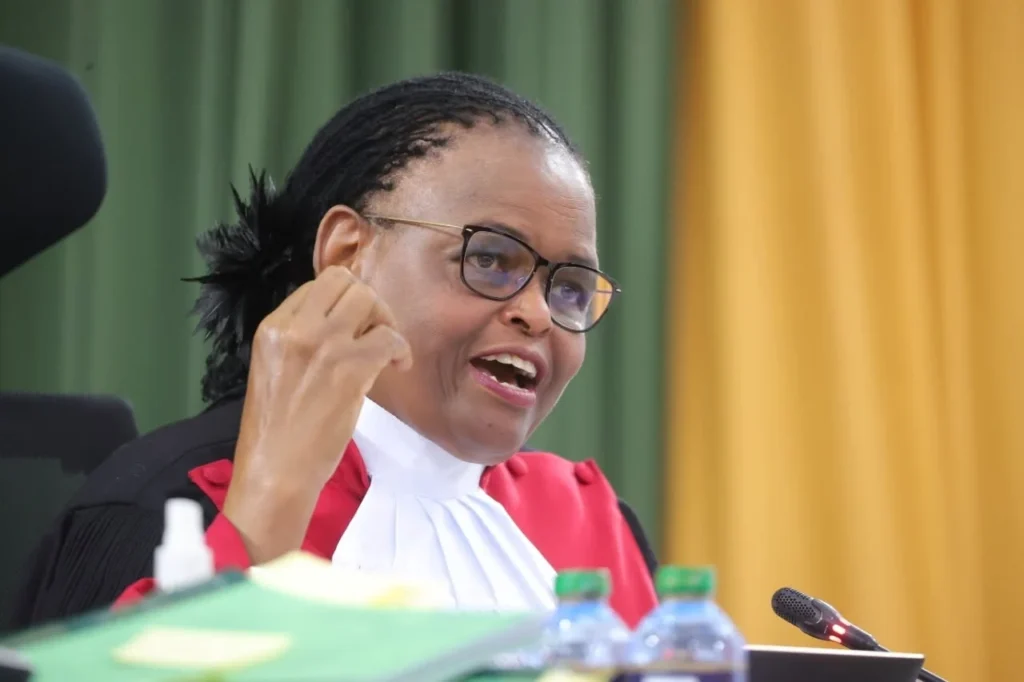
Kenya’s Judiciary is facing a KSh20.3 billion funding deficit ahead of the August 2027 General Election, raising concerns about its capacity to handle election-related disputes while maintaining access to justice across the country.
The Judiciary has been allocated KSh30.4 billion in the 2027/28 financial year, falling short of its KSh50.7 billion budget request by approximately 40 per cent. The funding gap comes at a critical time when courts are expected to resolve election petitions within strict constitutional deadlines.
The Institute of Economic Affairs (IEA) has raised concerns that the proposed budget lacks a dedicated allocation for handling election disputes. This could force the Judiciary to redirect funds from its regular operations to manage the anticipated increase in election-related cases.
Raphael Muya, an IEA programme officer, said the absence of a specific budget line for election dispute resolution could undermine the institution’s preparedness for the polls.
“ In terms of election preparedness, what we are saying is that the budget does not provide a dedicated allocation for election dispute resolution. If you go through the budget lines, we do not have those clear lines,” Muya said.
Following the elections, courts are expected to receive numerous petitions arising from presidential, parliamentary and county-level contests. Unlike ordinary cases, election petitions must be determined within constitutionally prescribed timelines to allow successful candidates to assume office and ensure continuity in government operations.
The IEA’s concerns also extend to the Independent Electoral and Boundaries Commission (IEBC), which has been allocated KSh28 billion for the 2027 elections, up from KSh25 billion in the current financial year.
However, Muya noted that the allocation does not include funding for the constitutionally mandated review of electoral boundaries, whose deadline has already passed.
He argued that although resources had been set aside for the general election, the budget had overlooked the boundaries delimitation exercise required under the Constitution.
The IEA noted that the review had been postponed until after the 2027 elections, leaving the two subsequent financial years as the crucial period for completing the exercise. Despite this, the programme has not been provided for in the government’s budget projections.
IEBC’s funding is expected to decline sharply to KSh4.9 billion in the 2029/30 financial year, representing an 83 per cent drop from its election-year allocation. The reduction could limit the commission’s capacity to fulfil its constitutional obligations after the polls, including reviewing electoral boundaries.
To address the funding challenges, the IEA has urged the National Treasury to introduce a separate, clearly costed allocation for election petitions in the Judiciary’s 2027/28 budget. The proposal is intended to ensure that election-related litigation does not disrupt the handling of ordinary court cases.
The organisation has also recommended that the government provide funding for the IEBC’s boundaries delimitation programme in the 2028/29 and 2029/30 financial years. It further called for greater transparency in how Treasury evaluates funding requests submitted by independent institutions against available budget ceilings.
Also Read: Paul Mackenzie, 11 Others Convicted In Shakahola Child Abuse Case As 24 Acquitted
Meanwhile, the IEBC has warned that it could struggle to livestream the 2027 General Election without additional government financing.
The commission estimates that installing cameras and deploying personnel to more than 50,000 polling stations would cost billions of shillings.
IEBC Chairperson Erastus Ethekon has questioned whether the commission can realistically equip every polling station with recording devices and recruit personnel to operate them, citing financial and logistical constraints under its current budget.
The concerns come amid growing calls from political leaders for greater transparency in the transmission and management of election results.
The IEA maintains that predictable and adequate funding for the Judiciary and electoral institutions is essential to protecting access to justice, strengthening electoral integrity and maintaining public confidence in the 2027 General Election.