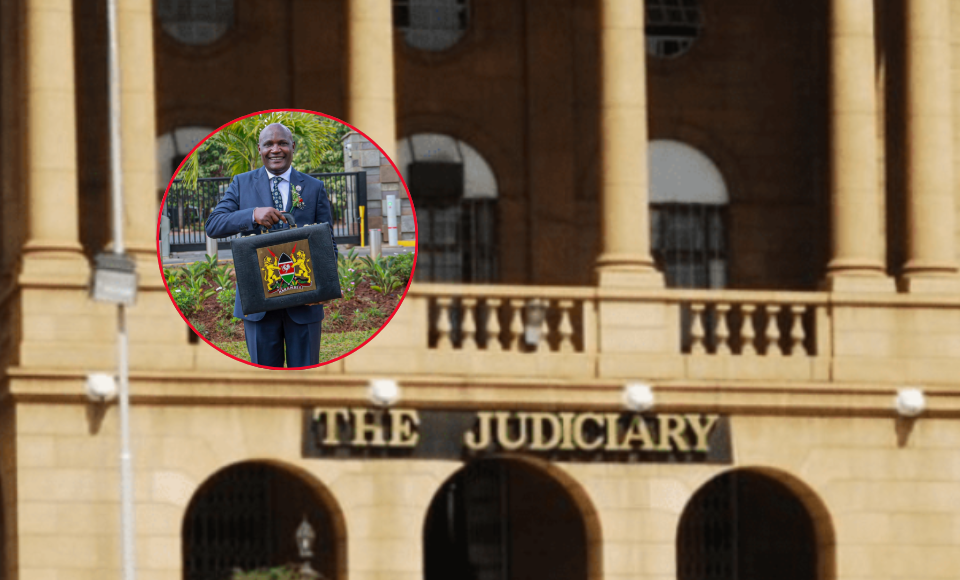
The Judiciary was allocated Sh30.38 billion in the 2026/27 financial year budget, marking an increase from the Sh27.8 billion it received in the previous fiscal year, as the government moves to strengthen the administration of justice amid growing case backlogs and operational demands.
Treasury Cabinet Secretary John Mbadi announced the allocation on Thursday while presenting the national government’s proposed Sh4.82 trillion spending plan before Parliament.
The Judiciary’s allocation represents an increase of Sh2.58 billion from last year’s budget and reflects continued government investment in the justice sector.
However, the funding falls significantly short of the institution’s stated needs, leaving a substantial financing gap that could affect the implementation of key reforms and service delivery programmes.
According to budget documents, the Judiciary had sought Sh46 billion to fully implement its commitments under the Bottom-Up Economic Transformation Agenda (BETA) and the Social Transformation through Access to
Justice (STAJ) blueprint.
The approved allocation, therefore, leaves a shortfall of about Sh15.62 billion.
The additional funding is expected to support court operations, improve access to justice and enhance efficiency in handling cases across the country, particularly in urban centres such as Nairobi, where courts continue to grapple with high caseloads.
In presenting the budget, Mbadi said the allocation would support the administration of justice and strengthen service delivery within the justice sector.
“This funding will enable the administration of justice and support the continued functioning of the Judiciary,” Mbadi said.
Separately, the Judicial Service Commission (JSC), which is responsible for the recruitment, discipline and welfare of judicial officers, has sought an independent allocation of Sh1.783 billion from Parliament to enable it to execute its constitutional mandate effectively.
The Judiciary’s increased allocation continues a trend witnessed in the previous financial year when funding rose from Sh24.7 billion to Sh27.8 billion, a Sh3.1 billion increase aimed at strengthening court operations and expanding access to justice.
Other institutions within the justice and accountability sector also received allocations in the new budget.
The Office of the Director of Public Prosecutions (ODPP) was allocated Sh7billion and the Ethics and Anti-Corruption Commission (EACC) Sh5.1 billion.
Mbadi also proposed Sh68 billion to settle verified outstanding claims in the 2026/27 Financial Year arising from pending bills owed to suppliers and contractors across various sectors.
Mbadi revealed that the Committee established to review outstanding claims reviewed 91,911 claims worth over Sh637 billion and recommended 29,885 claims amounting to Sh235.6 billion for settlement.
Following this verification process, Mbadi said Sh80.3 billion has already been settled through securitisation in the road sector, leaving a verified outstanding balance of Sh155.3 billion across other sectors.
He said the government will address the remaining obligations through a balanced and sustainable approach that combines direct budget allocations and securitisation.
“The verified outstanding balance will be cleared over two years, beginning in the 2026/27 financial year,” Mbadi said.
In the 2026/27 financial year, the National Treasury has proposed a budget allocation of Sh68 billion to settle verified pending bills owed to suppliers and contractors, with priority given to those owed up to Sh100 million.
Mbadi said the allocation will also partly cater for suppliers and contractors owed above Sh100 million to ensure fair inclusion across the board.
He noted that the approach is designed to ensure that the majority of suppliers, especially small and medium enterprises, are paid on time to support their operations.
He added settling smaller claims first will help protect working capital and strengthen business continuity for firms that depend on government payments.
Mbadi noted that with the payment of Sh68 billion worth of claims, the government will have settled 99 per cent of verified pending bills by number, representing 63 per cent of the total value.
He said the remaining Sh88 billion in verified claims will be addressed through other budgetary provisions and financial instruments.
Mbadi further explained that the policy of prioritising pending bills below Sh100 million is intended to support micro, small, and medium enterprises, which form the bulk of suppliers and are most affected by delayed payments.
He said this approach is expected to improve cash flow and sustain economic activity across key sectors.
In the financial sector, the Treasury CS said Kenya’s banking system remains stable and continues to support households, businesses, savings, and investment across the country.
He added that the sector remains strong and resilient in supporting economic growth.
READ ALSO;
