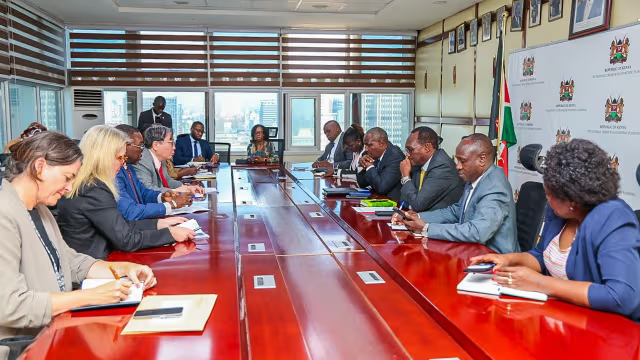
Kenya and the World Bank have reiterated their development partnership against the backdrop of sustained fiscal strain and the push to maintain economic momentum, following high-level talks held in Nairobi this week.
Kenya is currently implementing 31 active projects financed by the World Bank, with total commitments of about US$ 5.96 billion. The portfolio covers a wide range of economic and social sectors, including education, water and sanitation, housing, transport infrastructure, energy, urban development, and efforts to strengthen public sector institutions.
Senior government officials met with a visiting World Bank delegation to review the performance of existing financing arrangements and to outline priorities for future engagement.
The discussions were led by National Treasury Cabinet Secretary John Mbadi and the World Bank’s Managing Director and Chief Administrative Officer, Wencai Zhang. Talks centred on budget support operations and project financing aligned with Kenya’s Bottom-Up Economic Transformation Agenda (BETA), alongside a review of the country’s prospective pipeline under the World Bank’s IDA 21 financing framework. The pipeline is expected to focus on initiatives that promote inclusive growth and improved public service delivery.
Also Read: Cash in Circulation Climbs to KSh 357 Billion as Withdrawals Continue to Outstrip Deposits
Job creation and youth participation in the economy featured prominently, reflecting Kenya’s youthful population and ongoing labour market pressures. Officials assessed progress under the World Bank-backed National Youth Opportunities Towards Advancement (NYOTA) Programme, which supports young entrepreneurs through seed funding, skills development, and improved market access.
The World Bank delegation included Vice President for Eastern and Southern Africa Ndiamé Diop and Kenya Country Director Qimiao Fan, among other senior officials. The visit comes as Kenya grapples with limited fiscal headroom, rising development demands, and heightened scrutiny over the impact and efficiency of externally funded programmes.