Kenya is set to host its inaugural Trust Summit in October as declining confidence in government institutions, public leadership and governance structures raises concerns over its potential impact on economic growth and investment.
The Trust Summit: Nairobi Dialogues on Global Trust, scheduled for October 21-23, will bring together policymakers, business leaders, academics, civil society organisations, the media and young people to discuss how weakening institutional trust is affecting governance, investment and social cohesion.
The summit comes against the backdrop of surveys indicating growing scepticism among Kenyans towards public institutions.
Recent Afrobarometer findings show that only 45 per cent of Kenyans trust the President, a significant drop from 72 per cent in 2014. Trust in Parliament stands at 44 per cent, while only half of respondents expressed confidence in the courts. The police and electoral commission recorded trust levels of 36 per cent each.
The findings are broadly consistent with the 2025 Edelman Trust Barometer, which placed public trust in Kenya’s government at 38 per cent, four percentage points lower than the previous year.
The survey also found that eight out of 10 Kenyans believe government leaders deliberately mislead the public through false or exaggerated claims.
However, the 2026 Edelman findings present a less uniform picture, showing an overall improvement in institutional trust. Despite this, a seven-point trust gap remains between high- and low-income Kenyans, whose trust indices stood at 73 and 66 respectively.
The trust deficit is not unique to Kenya. Afrobarometer data covering 39 African countries shows that fewer than half of citizens trust their presidents, police, courts or parliaments. Average trust in Parliament stands at 37 per cent, while confidence in presidents is at 46 per cent.
Also Read: Mama Rachel Ruto Specialist Hospital Upgraded to 400-Bed Level 5 Facility
Since 2011, trust in all 11 institutions assessed by Afrobarometer has declined, with Parliament recording the sharpest drop of 19 percentage points.
Beyond its political implications, declining institutional confidence also carries an economic cost.
The World Bank has identified strong institutions and public trust as important factors in attracting investment, supporting businesses and creating employment. Low levels of trust can make entrepreneurs more hesitant to invest, while financial institutions may respond by reducing lending or imposing higher risk premiums.
Research by the World Bank in Morocco illustrates the potential economic consequences, estimating that declining trust reduced economic growth by $2.21 billion between 2005 and 2014.
In Africa, corruption and illicit financial flows further demonstrate the economic consequences of weak institutions. Kenya’s 2025 National Gender and Corruption Survey estimates that Africa loses about $88.6 billion annually, equivalent to 3.7 per cent of the continent’s GDP, through corruption, tax evasion and related illicit financial practices.
The issue is particularly significant for Kenya as the government increasingly turns to private capital to finance infrastructure and development projects amid fiscal pressures.
The World Bank has identified weak transparency and judicial oversight as persistent barriers to private investment across sub-Saharan Africa, while the IMF estimates that governance and regulatory reforms could increase regional economic output by about 20 per cent over a decade.
Ahead of the summit, governance and civil society leaders meeting in Nairobi have called for stronger institutions that are transparent, accountable and responsive to citizens.
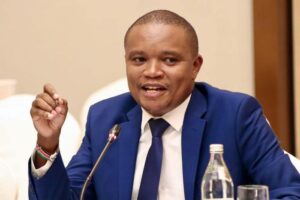
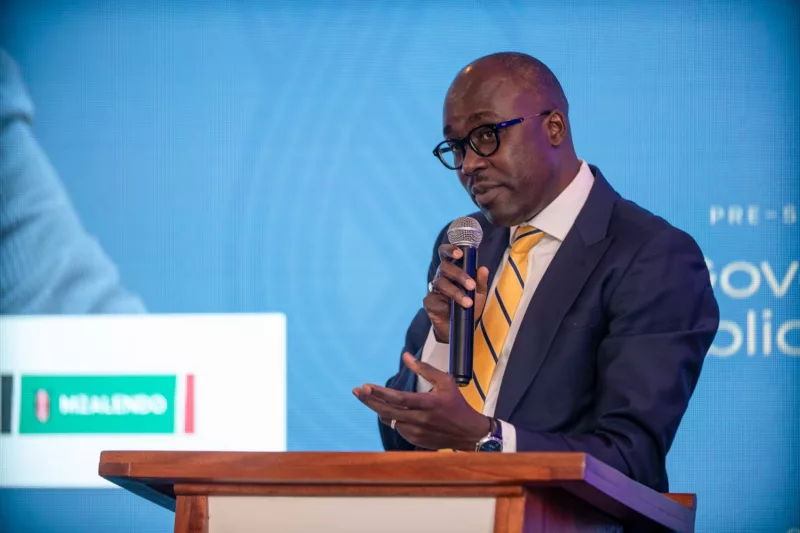
Speaking during a pre-summit roundtable, Mzalendo Trust Executive Director Caroline Gaita said public trust was fundamental to democracy and could only be sustained when institutions demonstrate that they serve the public interest.
Foreign Affairs Principal Secretary Korir Sing’Oei said Kenya faces a paradox in which constitutional institutions established to build public confidence have instead witnessed declining levels of trust.
The Katiba Day meeting, organised by Mzalendo Trust, Open Government Partnership Kenya and the State Department for Foreign Affairs, focused on strengthening oversight and transparency in public finances, increasing youth participation and protecting the independence of accountability institutions.
The October summit will therefore seek to move the conversation beyond political rhetoric and towards practical measures for rebuilding institutional confidence.
According to Sing’Oei, restoring public trust could also reduce perceived investment risks, improve compliance, encourage greater public participation and unlock economic value lost through institutional uncertainty.