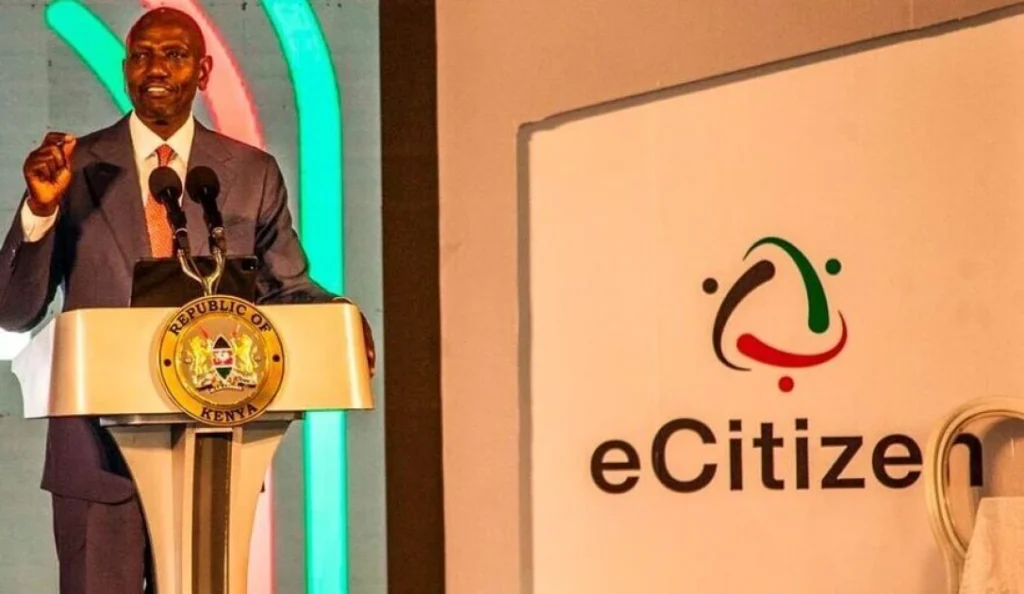
Kenya’s proposal to commercialise data collected through eCitizen and other government platforms has sparked debate over the role of data in the modern economy and the extent to which public institutions can profit from information generated by citizens.
At the heart of the initiative is a proposed data marketplace that would allow businesses, researchers, investors and innovators to access selected government datasets for a fee. The plan comes as governments worldwide increasingly recognise data as a valuable economic resource.
However, unlike conventional public assets, much of the information held by the State originates from citizens. This has reignited discussions around privacy rights, data ownership and whether information gathered for public service delivery can later be turned into a commercial product.
Kenya’s legal framework already establishes clear limits on what categories of data may be shared or monetised. While some government-held information could hold significant commercial value, other datasets remain protected under law because they contain details that can identify individuals. These distinctions will be central to how any future data marketplace operates and the safeguards required to protect citizens.
Why the Government Wants to Commercialise Data
Government officials argue that large volumes of information collected across public institutions remain largely untapped despite their potential value. By granting access to selected datasets, the State hopes to create new revenue streams while enabling innovation, research and data-driven decision-making.
Personal vs Non-Personal Data
Personal data includes any information capable of identifying a living individual, whether directly or indirectly. This covers names, national identification numbers, phone contacts, email addresses, biometric information, photographs, geolocation details and financial records.
Even when names are removed, data may still qualify as personal if it can reasonably be traced back to a specific person. Information showing ownership of property, tax payments, receipt of government benefits or visits to healthcare facilities would generally remain protected.
By contrast, non-personal data does not identify individuals. It is typically aggregated, anonymised or statistical in nature. Examples include county-level crop production figures, road traffic statistics, rainfall patterns, electricity consumption trends and broader economic indicators.
Why Personal Data Cannot Be Sold
Kenya’s Data Protection Act imposes strict controls on how personal information may be collected, processed, shared and transferred.
Public institutions generally obtain personal data for specific purposes such as issuing identity documents, administering taxes, providing healthcare services, delivering education or managing social programmes. The law requires that such information be used only for the purpose for which it was originally collected unless another lawful basis exists.
Commercialising citizens’ personal information could breach key principles of data protection, including lawful processing, fairness and purpose limitation.
Also Read: Rising Treasury Bill Yields Push Up Borrowing Costs for Businesses
The Constitution also protects individuals from unnecessary disclosure of information relating to their private affairs. Unrestricted sale of personal data could expose citizens to identity theft, fraud, discrimination, profiling and unwarranted surveillance.
For this reason, personal information is largely regarded as a protected right belonging to the individual rather than a commodity that the government can freely trade.
Why Some Economic Data May Also Be Exempt
Not all non-personal data can automatically be commercialised.
Under the Access to Information Act, government agencies are required to provide certain categories of information to the public, subject to limited exemptions. Data relating to public expenditure, government projects, procurement contracts, environmental matters and economic performance is often expected to remain accessible to support transparency and accountability.
As a result, some information may be unsuitable for commercial sale because citizens already have a legal right to access it.
Privacy Safeguards
The government’s proposal is expected to rely heavily on anonymisation and aggregation techniques.
Anonymisation removes or alters identifying details to prevent individuals from being recognised, while aggregation combines data into broader categories that reveal trends without exposing personal records.
The Office of the Data Protection Commissioner is expected to play a central oversight role, ensuring compliance with the Data Protection Act and verifying that datasets released through the marketplace meet legal and privacy standards.
Participants accessing the marketplace would also be subject to regulatory oversight to ensure data is used appropriately and that only anonymised information is obtained.
Who Owns the Data?
The initiative has also reignited debate over data ownership.
Current Kenyan law recognises that individuals retain rights over their personal information even when it is stored by public institutions. Government agencies are generally viewed as custodians or controllers of personal data rather than outright owners.
The status of non-personal data is less clear. Governments often maintain that aggregated datasets created through public administration constitute national assets that can support economic growth and innovation. However, questions remain about whether citizens should retain a stake in such data or benefit financially from its commercial use.
Potential Benefits and Risks
Supporters argue that a government data marketplace could unlock value from information that currently remains underutilised. Researchers could gain access to richer datasets, businesses could make more informed investment decisions and technology firms could develop new products and services.
Critics, however, caution that inadequate safeguards could threaten privacy, encourage excessive data collection and blur the distinction between public service delivery and commercial activity.
Ultimately, the success of the initiative will depend on the government’s ability to demonstrate that citizens’ rights are protected, personal information remains secure and commercially valuable datasets can be shared without eroding public trust.
International Experience
Several countries, including the United Kingdom, the United States and Singapore, have already recognised the economic value of public-sector data.
Rather than selling core public information outright, many governments have focused on expanding open-data initiatives while charging for specialised datasets, real-time information services and value-added products. These models are often cited as examples of how governments can balance economic opportunities with transparency and privacy protections.