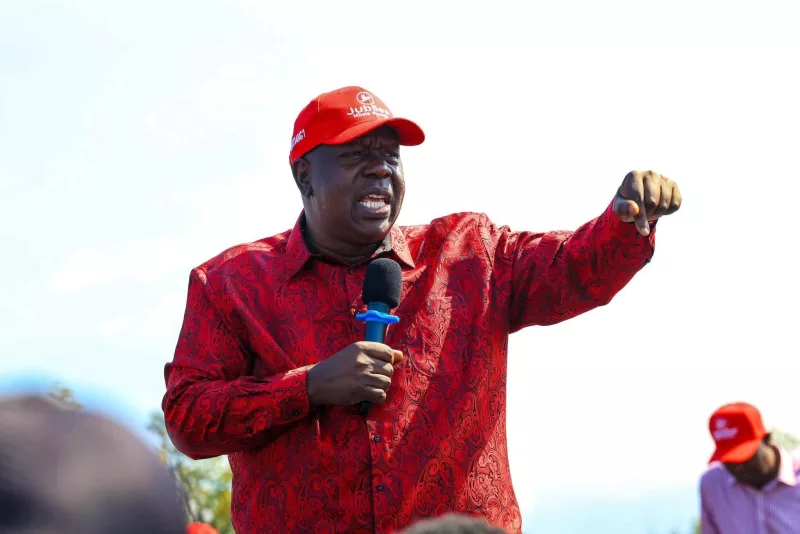
Former Interior Cabinet Secretary Fred Matiang’i has challenged President William Ruto’s account of the printing of the 2026 national examinations, accusing the Head of State of misleading Kenyans about where the examination materials were produced.
Matiang’i disputed the government’s announcement that the examination papers were printed locally, arguing that available records showed that a consignment of examination materials had instead been shipped into Kenya from Greece.
“The president is lying to people that they printed the examination papers here, yet the records are available, showing that they imported the examinations from Greece,” Matiang’i said.
His remarks have reignited debate over the government’s claim that Kenya had finally ended its dependence on foreign printing companies for national examinations.
What did Ruto announce about the 2026 examinations?
During his State of the Nation Address on November 18, President Ruto announced that Kenya had printed national examination papers locally for the first time in 65 years.
The president described the development as a significant achievement, adding that the decision had saved taxpayers approximately KSh1.5 billion.
However, records detailing the arrival of a shipment from Greece have raised questions about the government’s announcement and the nature of the materials imported into the country.
According to police records, a consignment weighing approximately 71.3 tonnes landed at Jomo Kenyatta International Airport on October 3 aboard a Magma Aviation flight originating from Athens, Greece.
The shipment was reportedly received under tight security, with officers from the General Service Unit (GSU) overseeing its handling before it was transported to a secure storage facility.
The consignment has since become a subject of controversy, with questions emerging over whether it contained examination papers, other examination-related materials or supplies intended for a separate purpose.
The developments have also brought renewed scrutiny to the procurement arrangements for the 2026 national examinations.
Why has KNEC classified examination printing details?
The controversy follows an earlier attempt by Busia Senator Okiya Omtatah to obtain information from the Kenya National Examinations Council (KNEC) regarding the procurement of examination printing services.
However, KNEC Chief Executive Officer David Njengere declined to disclose the requested details, citing national security concerns and the need to safeguard the integrity of national examinations.
Also Read: KEBS Tightens Used Car Import Rules, Sets 2020 as Minimum Registration Year
Njengere explained that the procurement process had been classified, adding that a proposal to classify the relevant items was submitted through the Ministry of Education in December 2025.
The proposal subsequently received Cabinet approval in April 2026.
Despite the claims raised by Matiang’i and the reported arrival of the Greek consignment, the government is yet to issue a public explanation clarifying how the imported materials relate to Ruto’s announcement that the 2026 national examination papers were printed in Kenya.