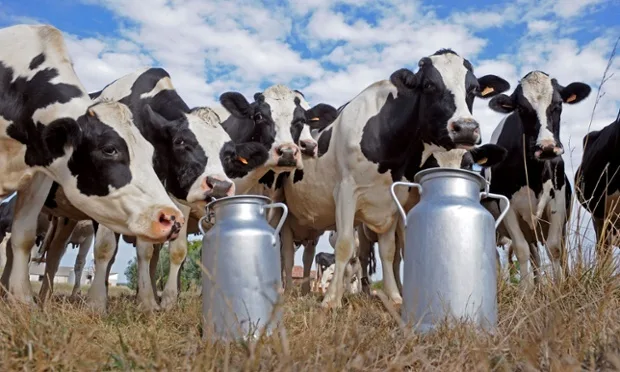
Milk supplies are coming under pressure in parts of the country, with some supermarkets and retail outlets introducing purchase limits as prolonged dry conditions continue to affect dairy production.
A spot check of supermarkets and retail shops in Nairobi found several outlets with empty or partially stocked shelves, while some retailers had restricted the quantity of milk customers could purchase.
At some outlets, shoppers were limited to one litre of milk from dispensers, while certain wholesalers were allowing customers to buy a maximum of five packets of packaged milk instead of a full carton.
Long-life milk was selling at between Sh54 and Sh65, while the few fresh milk brands available were priced between Sh61 and Sh65. At Waithaka Dairy Centre, the price of fresh milk had risen from Sh70 to Sh80 per litre.
Consumers Federation of Kenya (COFEK) Secretary-General Stephen Mutoro called for urgent government intervention to restore supplies and prevent further price increases.
Mutoro cited Kenya National Bureau of Statistics data showing that formal-sector milk intake declined from 88.89 million litres in May 2026 to 84.44 million litres in June.
June’s intake was 6.4 per cent lower than the 90.24 million litres recorded during the same month in 2025. Between January and June 2026, cumulative formal milk intake stood at 513.32 million litres, compared with 516.34 million litres during the corresponding period last year.
He attributed the decline partly to deteriorating conditions among smallholder dairy farmers, who produce approximately 80 per cent of Kenya’s milk.
Mutoro urged the Ministry of Agriculture to develop and publish a recovery plan while providing emergency fodder and feed assistance to dairy-producing counties affected by the dry spell.
He also called for the National Treasury to suspend import duty and VAT on key dairy-feed ingredients such as yellow maize and soya to ease production costs.
Farmers have reported a sharp decline in milk yields, with some cows producing between four and five litres a day, down from seven to nine litres as pasture deteriorates and the cost of animal feed increases.
Dairy farmer Andrew Mbogo from Narumoru, Nyeri County, said the dry conditions had significantly reduced his milk production.
“Grass has dried and the little nappier grass I have is almost finished. Milk harvest has gone down by almost half and if we don’t get any rains, this could get worse,” Mbogo said.
Mbogo keeps two dairy cows that can produce about 20 litres of milk daily under favourable conditions. He supplies the milk to a dairy cooperative and depends on the earnings to service his loans.
The lack of pasture and water has also forced some pastoralists to move their livestock to areas with better grazing conditions.
A pastoralist in Oloitoktok, Kajiado County, said some livestock keepers had moved their animals to ranches in Taita Taveta, where they pay about Sh300 per cow each month for grazing and water.
Also Read: SHA Opens New Contracting Process for Healthcare Providers
Data from the National Drought Management Authority shows that 52.2 per cent of monitored arid and semi-arid land counties recorded milk production below their long-term average in July.
The authority attributed the decline to reduced pasture and browse, longer distances to water sources, worsening livestock body conditions and the depletion of gains made during the previous rainy season.
However, Kieni Dairy Products Limited Chief Executive Officer Solomon Maina said reduced production was not the only factor behind the shortage.
Maina pointed to rising operating expenses, including fuel costs, which he said had prompted some processors to scale down pasteurised milk production while focusing more on higher-value products such as yoghurt, ice cream and cheese.
He also noted that delayed payments to farmers could be encouraging some producers to sell through informal channels, where milk can fetch between Sh70 and Sh80 per litre and farmers receive payment immediately.
“The shortage may not necessarily be caused by farmers because there are places like Nyandarua where it has been raining, but could be attributed to other factors such as working capital and distribution logistics,” Maina said.
He expects supplies to begin improving around October when the short rains arrive, provided the rainfall is sufficient to replenish pasture and water sources.
The Kenya Dairy Board has meanwhile assured consumers and industry players that milk remains available, although temporary supply constraints have been reported in some areas.
KDB Managing Director Dr William Maritim said formal milk deliveries to processors fell by 3.7 per cent, from 84.4 million litres in June 2026 to 81.3 million litres in July.
The Board is still compiling formal milk intake figures for August, although preliminary data indicates that deliveries may have declined further due to seasonal production conditions.
Recent market surveillance by the Board has also identified varying levels of supply constraints, including low stocks, reduced availability of certain brands and pack sizes, and delays in replenishing some retail outlets.
Maritim said pasteurised milk had been more affected, while long-life products such as ESL and UHT milk remained relatively more available.
He added that retail prices had generally remained stable, although some areas experiencing supply constraints had recorded price increases.
The Board attributed the current situation largely to seasonal conditions, particularly the dry and cold weather affecting major milk-producing areas.
The October-November-December 2026 rainfall season is expected to improve pasture and fodder availability, potentially supporting a recovery in milk production and supplies.
Maritim said the Government was implementing measures aimed at boosting dairy production and strengthening the resilience of the sector.
The interventions include procuring and distributing milk coolers to improve milk aggregation and preservation, as well as supporting dairy herd improvement through subsidised sexed semen.
“KDB continues to monitor milk production, formal milk deliveries, market availability and retail prices and is working with industry stakeholders to support continuity of supply. Consumers and stakeholders are therefore reassured that the current situation is temporary,” Maritim said.