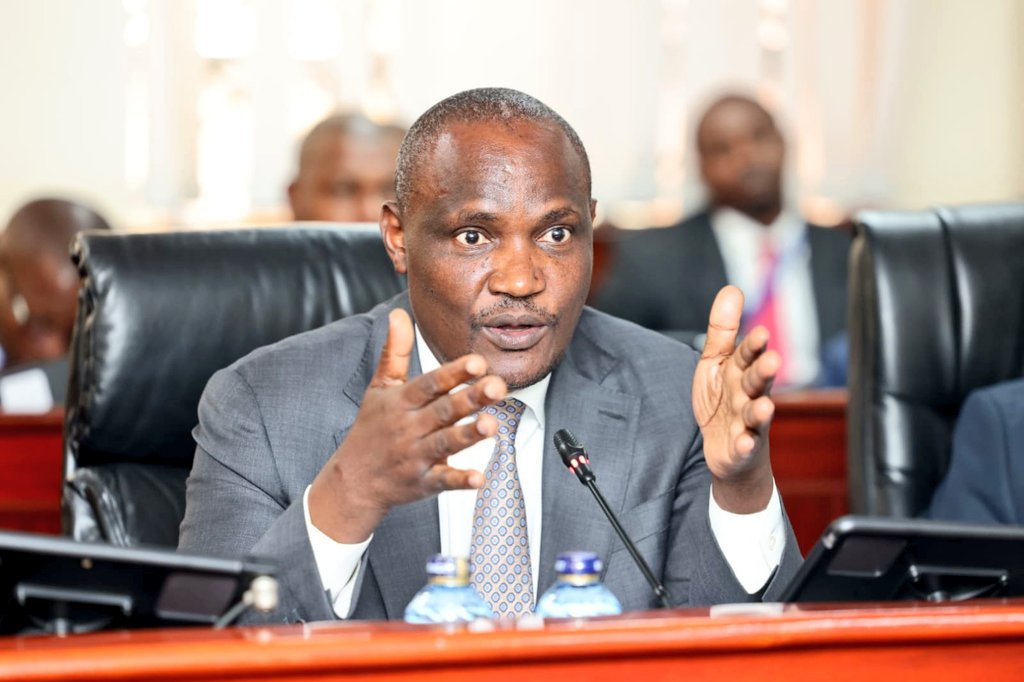
The National Treasury has assured legislators that no new tax rates will be introduced in the 2026 Finance Bill, opting instead to tighten compliance and widen the tax net.
Cabinet Secretary John Mbadi made the commitment while appearing before the National Assembly’s Budget and Appropriations Committee during deliberations on the first supplementary estimates for the 2025/26 financial year. The session forms part of ongoing efforts to shape the fiscal framework ahead of the next budget.
He emphasised that the government’s strategy is to boost revenue without raising taxes, maintaining continuity with last year’s approach and signalling a broader policy shift adopted since 2024. The Treasury is banking on stricter enforcement, digitised tax systems, and improved compliance to meet revenue targets without sparking public backlash.
Mbadi reiterated that there is no justification for increasing tax rates, noting that the economic conditions facing Kenyans remain largely unchanged. Instead, the focus will be on expanding the taxpayer base.
This reassurance comes as Parliament enforces a tight spending cap for the 2026/27 budget, limiting national government expenditure to about KSh 2.88 trillion, even as overall spending pressures continue to mount.
Under the current budget framework, the Executive is allocated KSh 2.797 trillion, Parliament KSh 50.7 billion, the Judiciary KSh 30.4 billion, and the Office of the Auditor-General KSh 9 billion.
The Treasury’s cautious stance follows the fallout from the 2024 Finance Bill, which introduced several new taxes that triggered widespread public discontent and forced the government to roll back key proposals. That episode still looms large, shaping a more measured fiscal approach centred on compliance rather than new levies.
Mbadi acknowledged that expanding the tax base has proven slower than anticipated but insisted that pressure is being applied on the Kenya Revenue Authority to improve collection. He warned that failure to deliver results could prompt structural reforms, particularly through automation.
Also Read: NCBA Delivers Historic KSh 23.4Bn Profit as Nedbank Acquisition Nears
Politics is clearly in the mix. With the 2027 general election on the horizon, the government appears keen to avoid policies that might be seen as piling further strain on households already grappling with a high cost of living.
Even so, the path ahead is hardly straightforward. Despite ruling out new taxes, the government’s fiscal plan still leans heavily on borrowing, as projected revenues fall short of expenditure. This raises concerns about increased reliance on domestic debt, which risks crowding out private sector investment.
The Treasury is placing its bets on administrative reforms, including electronic tax invoicing, automated return verification, and closer scrutiny of online and small business transactions, particularly within the informal sector.
However, enforcement remains tricky. Much of the informal economy operates in cash and outside formal systems, meaning compliance measures often end up burdening already registered taxpayers rather than capturing new ones. Should revenue projections miss the mark, the government may be forced to either borrow more or cut spending, both of which would deepen existing fiscal pressures.