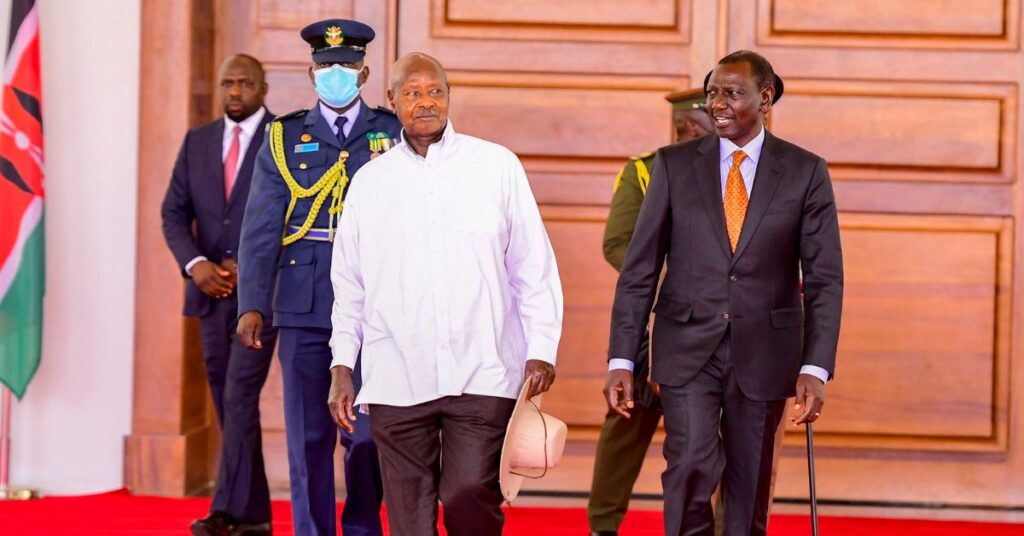
President William Ruto has defended Kenya’s Government-to-Government (G-to-G) fuel importation arrangement following claims by Ugandan President Yoweri Museveni that brokers within the deal prompted Uganda to abandon an earlier oil import agreement with Kenya.
Speaking to Kenyans in the United States on Monday, September 21, Ruto said the deal referenced by Museveni dated back to 2019, seven years before he assumed office.
The President maintained that Kenya’s current G-to-G arrangement had eliminated middlemen by allowing the country to purchase fuel directly from producing companies.
He dismissed concerns raised over the arrangement, insisting that the government had successfully addressed the issue of brokers in fuel imports.
Ruto further suggested that Uganda’s decision to withdraw from the earlier arrangement had come at a cost, claiming that the country now imports fuel at higher prices than it did under the deal with Kenya.
He said Kenya’s model had helped ensure timely fuel deliveries while keeping importation costs manageable.
The Head of State also maintained that Kenya’s fuel importation framework was more effective than those used by other countries in the region, adding that Malawi and Burundi had approached Kenya to learn how the system operates.
Also Read: High Court Nullifies Law Preventing Retired Presidents From Holding Party Positions
Ruto challenged critics of the G-to-G arrangement to provide evidence of any shortcomings and propose an alternative model that could deliver better results.
He urged those questioning the deal to compare the landed costs of petroleum products in Kenya and Uganda, arguing that the figures would demonstrate the cost differences between the two countries’ importation systems.
The remarks followed widespread discussion after Museveni claimed that Uganda had cancelled an oil import agreement with Kenya after being informed of alleged brokers involved in the arrangement.
Both the Ugandan President and the Kenyan government issued statements after the video of Museveni’s remarks circulated widely.
Museveni identified the Kenyan politician who had alerted him to the alleged intermediaries in 2019 as former Lugari MP Cyrus Jirongo.
Meanwhile, Kenya’s Ministry of Energy and Petroleum has defended the current G-to-G fuel importation arrangement amid increased scrutiny.
The ministry said the system was introduced after the current administration took office in September 2022 to address severe foreign exchange shortages that had threatened the country’s ability to import fuel and other essential commodities.