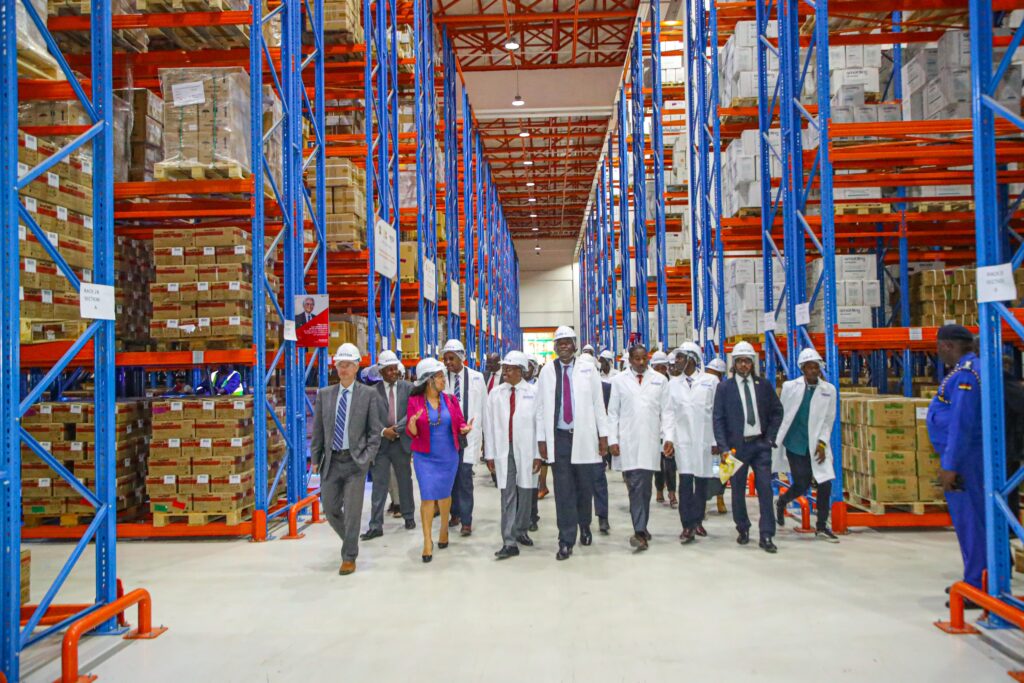
The Senate Standing Committee on Health has expressed concern over the reported expiry of medicines valued at approximately Ksh1 billion, according to a report by the Kenya Medical Supplies Authority (KEMSA).
The issue was raised on Thursday, September 17, during a meeting between the committee and Pharmacy and Poisons Board (PPB) Chief Executive Officer Ahmed Mohamed.
The meeting, chaired by Uasin Gishu Senator Jackson Mandago, focused on the implementation of resolutions reached by the Senate following the committee’s County Oversight and Networking Engagements.
During the session, Mohamed outlined measures the PPB is implementing to strengthen pharmaceutical regulation, including risk-based inspections and improved management of pharmaceutical waste.
Other interventions include digital transformation, enhanced licensing systems and mandatory Continuing Professional Development (CPD) for pharmacy professionals.
Mohamed said the measures aim to enhance accountability across the pharmaceutical supply chain while ensuring that pharmaceutical services remain safe, accessible and meet the required quality standards in support of Universal Health Coverage.
However, senators raised concerns over the reported loss of medicines worth approximately Ksh1 billion through expiry, warning that such wastage could undermine access to healthcare and lead to the loss of public funds.
The committee urged the PPB to strengthen its oversight mechanisms to prevent medicines from expiring while in storage at public health facilities.
Senators stressed that proper management of pharmaceutical supplies was essential to ensure patients receive essential medicines in good time while safeguarding public resources against avoidable losses.
The committee further directed that health facilities handling expired medicines must have the necessary licences and comply with established procedures for the safe disposal of pharmaceutical waste.
The development comes days after Bishop Gatimu Ngandu Girls High School faced scrutiny over a Ksh1 million investment in shares at the Nairobi Securities Exchange (NSE).
The matter was raised on Tuesday, September 15, before the National Assembly Public Investments Committee on Governance and Education (PIC-G&E), following concerns by the Auditor-General over Ksh1.58 million recorded as short-term investments in the school’s financial statements for the year ended June 2021.
Auditors noted that the institution had failed to provide investment certificates and other supporting documents, making it difficult to establish the existence and completeness of the reported amount.
Appearing before the committee, Chief Principal Jane Njuguna said the Ksh1.58 million comprised several balances, including Ksh1 million invested in stock exchange shares, with the remainder held in various accounts.
Njuguna told MPs that the investment had generated finance income for the school.
However, her revelation that the Ksh1 million investment had earned only Ksh5,381 in dividends over one year prompted questions from the committee.
Committee Chairperson and Luanda MP Dick Maungu questioned whether the investment was delivering value for money.
“Can you imagine we have Ksh1 million and this year you got Ksh5,000?” Maungu asked.
School bursar Racheal Wambui told the committee that the investment was still active, with dividend payments channelled through Absa and Centum.
However, she could not immediately identify the specific companies in which the school had purchased shares.
Wambui explained that the investment was made before 2010, while she joined the institution in 2022.
She nevertheless acknowledged that the returns indicated the investment might not be providing sufficient value for the school.
“Economically, I would say that it could not maybe give the value for money,” she said.