Kenya could secure up to $600 million (approximately Sh77.5 billion) in new investments from US companies over the next year as American firms increase their presence in the country and seek to tap into the wider East African market.
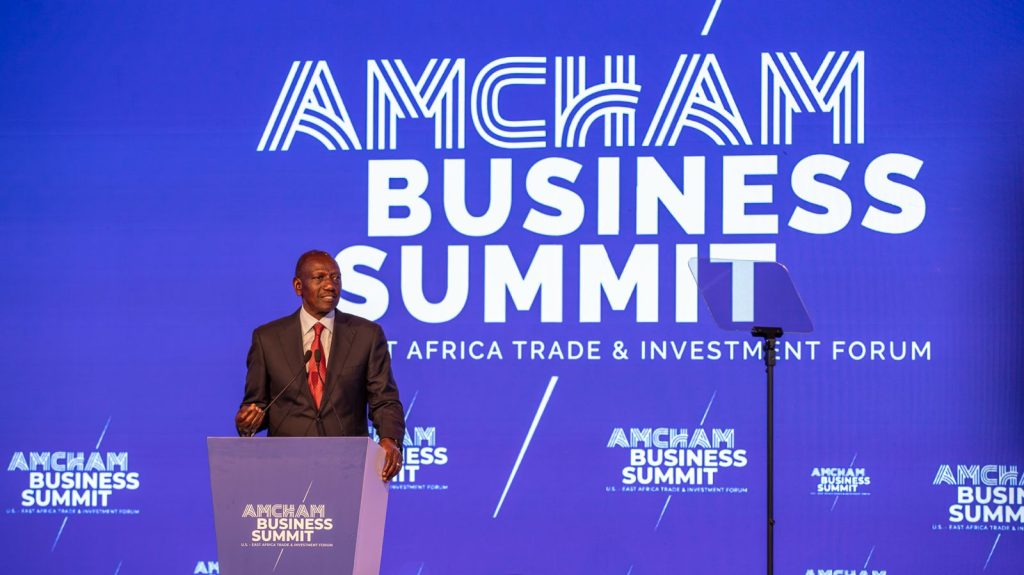
The investment commitments were announced during the AmCham Business Summit 2026 in Nairobi, where US companies unveiled projects in manufacturing, technology, data centres, healthcare, digital skills and other key sectors.
American Chamber of Commerce (AmCham) Kenya board president Angela Ng’ang’a said US firms announced more than $600 million in pledges and commitments within a single day, with most of the investments expected to be rolled out over the next year.
Among the major announcements was Coca-Cola’s planned $175 million (Sh22.6 billion) investment in Kenya, which will expand the beverage company’s existing operations in the country.
Mars Wrigley also commissioned a $103 million (Sh13.3 billion) production line, further strengthening Kenya’s manufacturing capacity and its role as a regional supply-chain hub.
Kenya’s technology sector also received a boost after Oracle selected the country for its first public cloud region in Africa through a partnership with African Data Centres.
The project is expected to expand cloud infrastructure and reinforce Kenya’s position as a digital hub for the region.
Digital Realty, formerly iColo, announced an additional $80 million investment in a data centre in Nairobi, adding to the country’s growing digital infrastructure.
The healthcare sector also attracted new commitments, with SC Johnson announcing plans to establish a factory in Kenya capable of producing up to two million malaria-related units each day.
Pharmaceutical company Pfizer is also expected to introduce 15 new products in Kenya, including medicines used to treat cancer.
The new investments come as Kenya seeks to transform its economic ties with the US from a relationship largely focused on development assistance to one driven by trade, investment and employment.
Ng’ang’a said the two countries were pursuing a more reciprocal economic partnership, with progress increasingly measured through trade, investment and job creation.
The summit coincided with the extension of the African Growth and Opportunity Act (AGOA) to December 31, 2028. The extension preserves duty-free access to the US market for qualifying Kenyan exports, offering greater certainty to manufacturers, particularly those in the apparel industry.
Trade and Investment Cabinet Secretary Lee Kinyanjui said trade in goods and services between Kenya and the US stood at $3.4 billion (Sh439.3 billion) in 2025, with the trade balance reaching equilibrium.
He noted that the relationship had expanded beyond traditional trade to areas including technology, critical minerals, healthcare and development finance.
Kinyanjui identified apparel as a major component of Kenya’s exports to the US, accounting for about 70 per cent of the total, with most benefiting from AGOA preferences.
The government is also targeting seven priority sectors for new investment: agriculture, the digital economy, energy and infrastructure, manufacturing, healthcare, critical minerals and the creative economy.
Earlier this year, Kenya announced 20 investment deals worth $2.9 billion during the Kenya International Investment Conference, while previous AmCham summits had generated more than $2 billion in tracked investment commitments.
President William Ruto said investors were increasingly comparing different markets and moving capital rapidly when favourable conditions emerged.
“Capital goes where there is opportunity, but it stays where there is confidence,” Ruto said, stressing the need to improve Kenya’s investment environment.
Also Read: IEBC Faces Questions Over UDA Remarks on Votes of Deceased Voters
He said the government had introduced more than 50 measures aimed at making it easier to do business, covering areas such as access to finance, taxation, regulation, county licensing and special economic zones.
The focus now shifts to turning the latest pledges into actual investments, including factories, infrastructure, jobs and increased exports.
Speaking at the close of the summit, Prime Cabinet Secretary and Foreign Affairs Cabinet Secretary Musalia Mudavadi said the government and businesses must move beyond announcing commitments to implementing them.
“Promise what you can deliver and deliver what you promise,” Mudavadi said, emphasising the importance of honouring commitments made during the summit.
He said successful implementation would require moving from policy commitments to legislation and tangible projects on the ground.
The government is also seeking to increase local value addition from Kenya’s natural resources, particularly critical minerals.
Summit discussions explored ways of moving beyond mineral extraction towards processing and manufacturing of resources such as titanium, graphite and lithium.