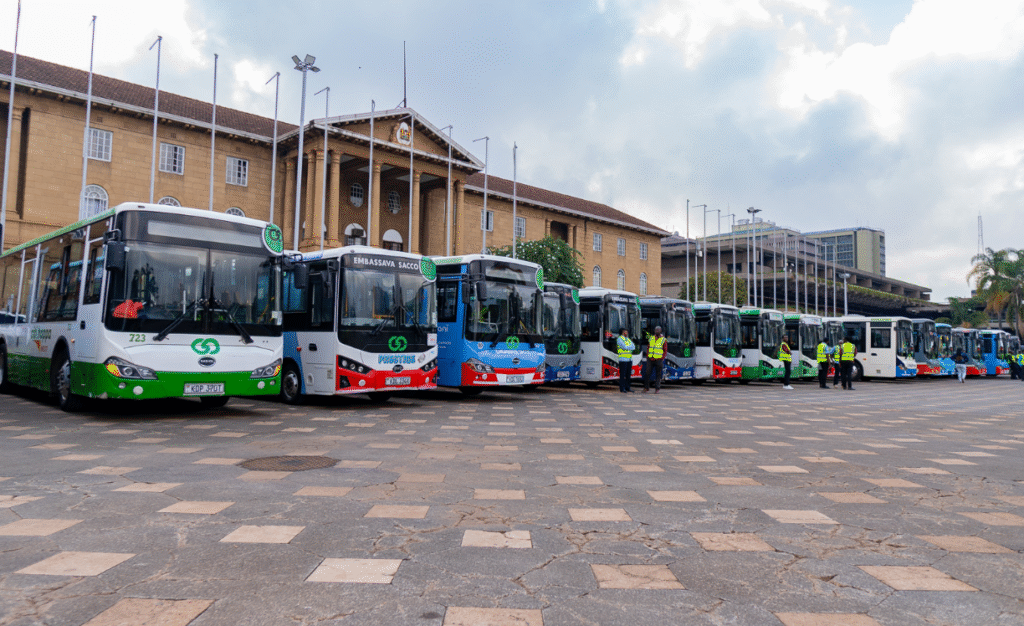
BasiGo is set to gain from Proparco’s multi-billion shilling electric mobility fund, following the French development financier’s newly completed investment in the company.
Proparco, France’s Development Finance Institution and the private-sector arm of the French Development Agency, has injected undisclosed capital into the electric bus maker as part of the AFD Group’s global commitment to low-carbon urban transport. The group channels roughly €1 billion (about Sh150 billion) annually into mobility projects worldwide.
The funding arrives at a pivotal moment for BasiGo, whose assembly output recently climbed to 20 buses a month. The firm raised Sh5.4 billion last year to scale its East African operations, targeting both Kenya and Rwanda. This latest capital builds on previous equity and debt injections, including Sh1.3 billion from the US International Development Finance Corporation in 2024 and a wider Sh5.5 billion round led by the pan-African infrastructure investor Africa50, alongside Sh2.3 billion in debt from British International Investment.
BasiGo, which works with Matatu Saccos to electrify inter-city travel, aims to deploy at least 1,000 electric buses by 2027. So far, about 100 buses are already in service in Kenya and Rwanda. The company assembles buses locally, runs charging infrastructure and partners with operators to provide a cleaner, cheaper alternative to diesel vehicles.
BasiGo co-founder and CEO Jit Bhattacharya said the adoption of locally assembled electric buses cuts emissions, improves urban air quality and supports meaningful employment, closely aligning with Proparco’s climate commitments and the Choose Africa agenda. Proparco’s East Africa regional director, Jean Guyonnet-Dupérat, said the investment will help deliver a new generation of clean, reliable mass transit for Kenya and Rwanda, with plans to scale across more African cities.
Also Read: Kenya Weighs Leasing Pyrethrum Processor as Debts Cripple Once-Thriving Sector
Since launching in 2021, BasiGo’s work has delivered major climate benefits, with electric buses slashing CO₂ emissions by an estimated 70 to 90 per cent compared to diesel models and improving public health through reduced air pollution.
Kenya has renewed its push for green mobility this year, although gaps in policy have slowed the EV transition. The country had hoped to have at least five per cent of newly registered vehicles running on electric power by 2025. That ambition forms part of a wider strategy to cut transport-sector emissions and boost renewable energy use.
In March last year, the Roads and Transport Ministry unveiled Kenya’s first e-mobility draft policy, describing it as a defining moment for the country’s transport future. The policy outlines a national transition away from conventional combustion engines across road, rail, air and maritime transport. Authorities say the Traffic Act must now be updated to accommodate these emerging technologies.
The Treasury has also introduced incentives to kick-start EV uptake. The Finance Bill 2025 granted VAT exemption on electric buses under tariff heading 87.02, a move expected to support adoption, particularly in Nairobi’s expanding electric public transport sector. Electric bicycles, solar batteries and lithium-ion batteries also received VAT exemptions.
Kenya had registered 9,047 electric vehicles by May this year, up from 2,694 in 2023, though the total still accounts for only 0.2 per cent of all vehicles on the roads.