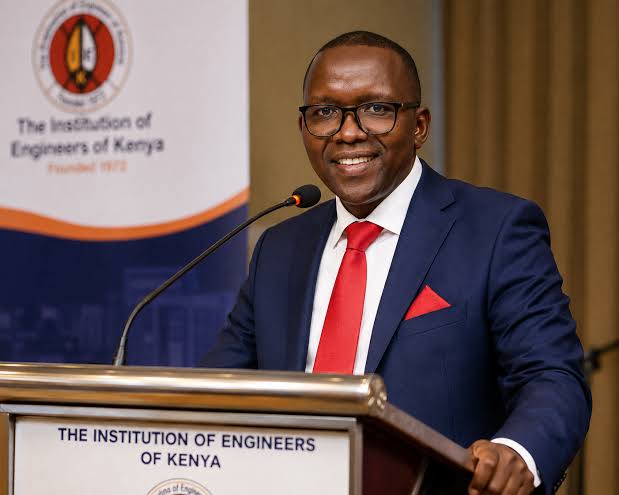
The Institution of Engineers of Kenya (IEK) has raised concerns that reduced government funding for the Engineers Board of Kenya (EBK) could weaken regulation of the construction industry and compromise engineering standards.
IEK president Harrison Keter called for the restoration of adequate state funding to the regulator, arguing that inspection of projects and enforcement of professional standards are public responsibilities with direct implications for safety and the economy.
Keter said EBK was among state agencies whose government funding was significantly cut after it was removed from the category of parastatals.
He warned that inadequate financing could deepen existing challenges in the construction sector, including the engagement of unqualified contractors and the misuse of engineers’ credentials on projects where the professionals are not actually involved.
The concerns come amid recurring cases of building collapses and infrastructure failures that have resulted in deaths and significant property losses. Keter said such incidents also impose broader economic costs on the country.
He urged the government to restore EBK’s access to sufficient public funding, saying effective regulation and enforcement of engineering standards cannot be sustained by an under-resourced institution.
The IEK president also proposed greater use of technology to monitor how engineers’ licences are being used on construction projects.
Under the proposed system, engineers would receive alerts whenever their licences are attached to a project, enabling them to report cases where their credentials have been used without their approval.
Keter said some engineers whose names appear on project documentation may not participate in the actual construction, exposing them to professional and legal consequences if a project fails.
He called for tighter oversight throughout the entire project cycle, from planning and design to construction, commissioning and handover.
Unemployment among engineers was also identified as a potential source of vulnerability, with some professionals allegedly accepting payments for having their names attached to projects without taking part in the work.
Keter said Kenyan universities produce roughly 3,000 engineering graduates every year, but only a small proportion secure structured graduate training opportunities.
He called for the establishment of a government-supported three-year training programme to provide young engineers with practical industry experience.
Also Read: Treasury Bars Politically Driven Projects From Sh340bn Infrastructure Fund
The IEK also wants greater participation of local engineers and consultants in major infrastructure projects, arguing that this would strengthen domestic technical capacity while creating employment opportunities.
The institution is further pushing for dedicated financing for locally owned engineering firms and consultants, including through the proposed National Infrastructure Fund.
Keter said infrastructure planning should also place greater emphasis on operations and maintenance, warning that poorly maintained facilities can deteriorate rapidly even after substantial investment in their construction.
He urged developers and members of the public to engage qualified professionals for construction work, stressing that safety must remain at the heart of engineering.
The IEK said it would continue collaborating with the government and private sector to improve professional standards through training in ethics, emerging technologies and the application of artificial intelligence in engineering.