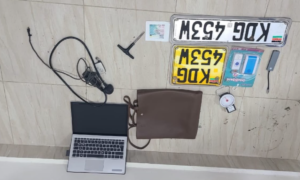
Detectives have arrested five suspects over a fraudulent cement supply scheme in which a woman lost Sh742,000 after being duped by individuals posing as representatives of Bamburi Cement PLC.
The suspects were arrested following investigations into an online scam that exploited the cement manufacturer’s corporate identity to lure unsuspecting customers into making payments for cement that was never delivered.
According to investigators, the complainant, identified as Joyce Wambui, was defrauded in August 2025 while seeking to purchase 1,400 bags of cement for her family’s construction project in Ruiru, Kiambu County.
Wambui reportedly came across a website, bamburicement.org, which purported to represent Bamburi Cement and provided a telephone number through which prospective customers could place orders.
After contacting the number, she was directed to continue negotiations through WhatsApp, where she agreed to purchase the cement at Sh530 per bag.
The purported supplier subsequently issued an invoice demanding Sh742,000, with payment instructions directing her to transfer the money to an I&M Bank account allegedly belonging to Bamburi Cement Limited.
On August 23, 2025, the complainant transferred the full amount through a bank transaction.
However, suspicions arose after the purported supplier became uncooperative when she sought confirmation of delivery arrangements. The cement was never delivered despite several days of waiting.
She later contacted Bamburi Cement through its official communication channels and was informed that the payment could not be traced in the company’s records.
Investigations subsequently established that the website, telephone number and invoice used in the transaction were fraudulent.
Bamburi Cement also confirmed that the telephone number was not associated with the company or any of its authorised sales representatives. Its official corporate website is bamburigroup.com.
Banking investigations traced the Sh742,000 to an I&M Bank account operated by Florence Atieno Okoth, before the money was transferred to an Absa Bank account belonging to Brian Mulumba.
The funds were subsequently withdrawn through ATMs in Kitengela, Kajiado County, with CCTV footage capturing a male suspect making the withdrawals.
Following investigations, detectives conducted an operation in Uasin Gishu and Nairobi counties, leading to the arrest of five suspects who were subsequently arraigned in court.
The suspects include Okoth, who allegedly opened the I&M Bank account used to receive the complainant’s money and admitted to voluntarily providing its details for use in the fraudulent scheme.
Dickson Alwala Mabati, Kevin Ongaya Were and Kelvin Kibet Keter were linked to the sourcing and collection of bank account details allegedly used to facilitate the fraudulent transactions.
The fifth suspect, Emmanuel Wekesa, alias Brian Mulumba, is accused of holding the Absa Bank account that received the money from the initial I&M account before the funds were withdrawn through ATMs in Kitengela.
Investigators said the scheme relied on impersonating an established corporate brand to gain the confidence of customers seeking bulk cement purchases.
The suspects allegedly used a website bearing a name similar to that of the legitimate manufacturer, telephone calls, WhatsApp conversations and counterfeit invoices to make the transactions appear genuine.
Detectives also noted that the offer of cement at Sh530 per bag, significantly below the prevailing market price, was used to entice the complainant into making payment without independently verifying the supplier.
The investigations have raised concerns over the potential abuse of mobile-based bank account opening platforms, particularly where false identity information or stolen personal details are used to register accounts.
Investigators called attention to the need for stronger Know Your Customer (KYC) procedures, effective identity verification and continuous monitoring of suspicious financial transactions by banks.
The case highlights how fraud networks are increasingly exploiting established corporate identities, online platforms and banking systems to steal money from unsuspecting members of the public.