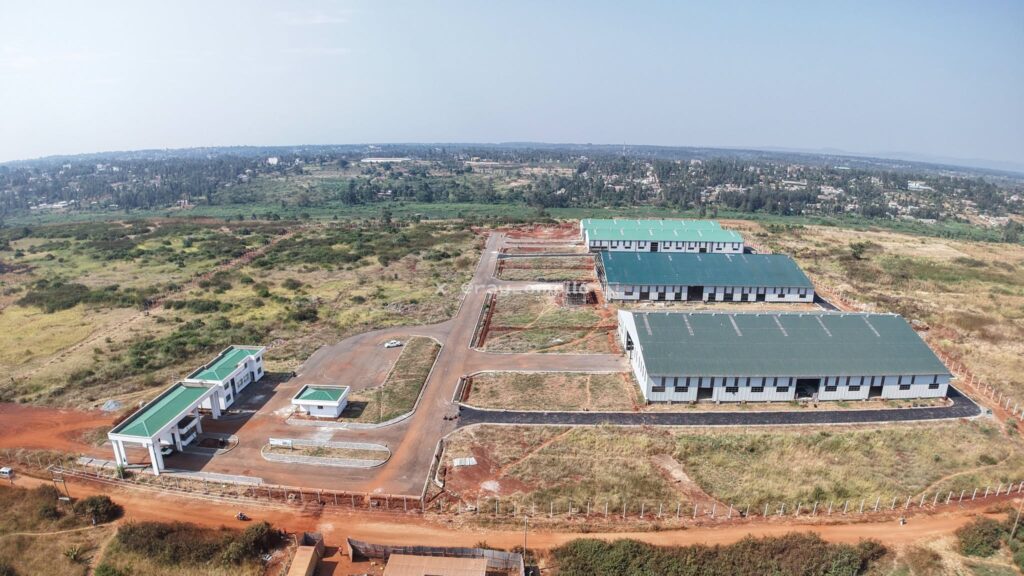
Construction of the Kabati Export Processing Zone (EPZ) in Mitubiri, Murang’a County, has reached 85 per cent completion, according to Interior Principal Secretary Raymond Omollo.
In an update issued on Monday, August 17, Omollo said construction is progressing, with perimeter fencing currently underway.
Four modern manufacturing warehouses have already been completed as the government moves to prepare the facility for industrial operations.
The project, located in Kakuzi Ward, is being developed as part of the government’s Bottom-Up Economic Transformation Agenda (BETA) and is expected to become a major manufacturing and agro-processing centre in the Central region.
The EPZ has allocated 500 acres for manufacturing, warehousing and export-related infrastructure, while another 700 acres will accommodate supporting facilities such as housing, healthcare, education and hospitality services.
Also Read: Kenya Fashion Industry Looks to China to Boost Local Manufacturing
Kabati is located about two kilometres off the Nairobi-Nyeri Highway and roughly 85 kilometres from Nairobi. Its location provides access to major road networks, Jomo Kenyatta International Airport and a sizeable labour pool.
The facility is expected to host several industries, including solar panel assembly, textile and garment manufacturing, industrial washing facilities for apparel production, agro-processing and packhouse operations.
The agro-processing component will focus on adding value to agricultural products produced in the region, including tea, coffee, macadamia nuts, avocados, fruits and vegetables.
Once fully operational, the Kabati EPZ is projected to generate between 15,000 and 20,000 direct jobs.
The latest update comes a day after Omollo announced the completion of the Ndunyu Chege ESP Market in Gatanga, also in Murang’a County. The market is awaiting official commissioning and is expected to support more than 150 traders while improving market access for farmers and reducing post-harvest losses.