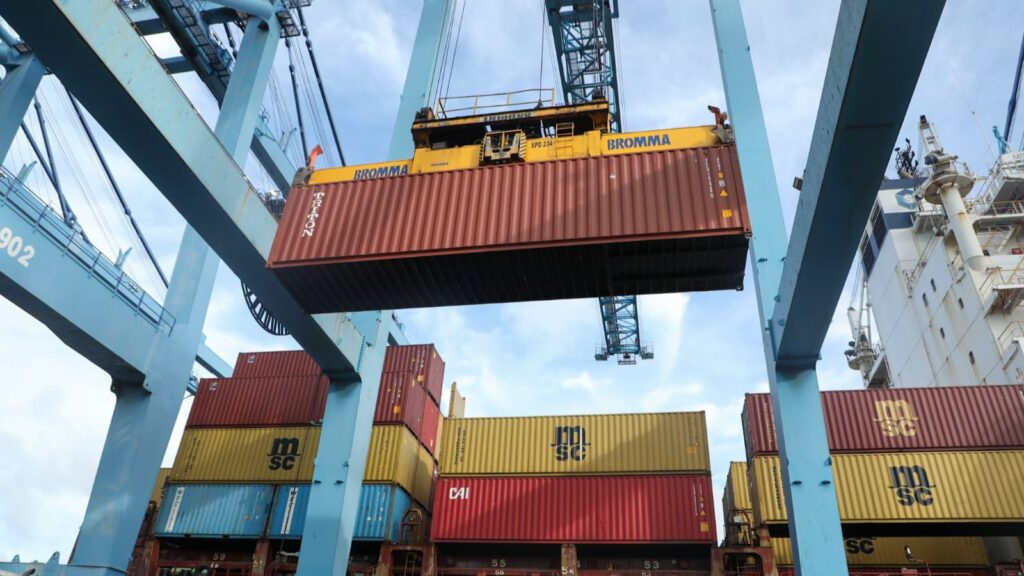
The Kenya Revenue Authority (KRA) has raised the minimum customs benchmark for general containerised consolidation cargo from KSh2.5 million to KSh3.2 million, with the new threshold taking effect on August 20, 2026.
KRA said the increase followed consultations with the Kenya International Freight and Warehousing Association (KIFWA), small-scale traders, cargo consolidators and other private-sector players.
The authority said the review is intended to tighten customs controls, curb revenue losses and promote fair competition among businesses that comply with tax requirements.
KRA maintained that the move is not aimed at penalising small traders but at preventing businesses from gaining an unfair advantage through practices such as undervaluation, under-declaration, misclassification, misdescription and concealment of goods.
Cargo consolidation remains a key option for small importers because it allows several shipments to be transported in one container, helping reduce the cost of bringing goods into Kenya. However, KRA said the system has increasingly been exploited by some traders, including larger importers seeking to lower their tax obligations.
The authority clarified that the KSh3.2 million figure is a minimum reference benchmark, not a fixed value assigned to every container. Importers whose goods are worth more must declare the actual value and pay the applicable taxes based on customs valuation and tariff rules.
KRA said the previous KSh2.5 million benchmark had remained unchanged for roughly six years despite shifts in economic conditions, import values and the types of goods entering the country.
The revised threshold is expected to provide customs officials with a more up-to-date reference point while helping curb revenue leakage and improve predictability in customs administration.
Also Read: NCPWD Warns of Fraudsters Targeting Persons Seeking Tax Exemptions
The changes come as KRA records stronger performance from its Customs and Border Control Department.
In July 2026, the department collected a record KSh92.53 billion, exceeding the National Treasury’s target of KSh86.16 billion by KSh6.37 billion. The collection represented 107.39 per cent of the target and was 15.3 per cent higher than the KSh80.29 billion collected in July 2025.
Non-oil customs revenue accounted for a significant portion of the increase, rising to KSh61.50 billion, marking the first time monthly non-oil collections surpassed the KSh60 billion mark.
KRA attributed the improved performance to increased use of technology, stronger cargo management systems and enhanced compliance measures. The authority said digital tools are being used to strengthen cargo risk assessment, speed up declaration processing and combat illicit trade and revenue losses.
The reforms are also intended to make customs procedures more efficient and transparent while ensuring the government collects all taxes due.
KRA Customs and Border Control Commissioner Dr Lilian Nyawanda said the July figures reflected the impact of investments in technology, compliance, trade facilitation and engagement with stakeholders.