M-Gas is in discussions with the government as it seeks formal clearance to begin trading carbon credits generated from its clean-cooking operations.
The liquefied petroleum gas distributor, backed by Safaricom and owned by UK-based Circle Gas, has already secured a Letter of Approval from authorities, a critical step before carbon projects can access international markets. Safaricom acquired a 18.96 per cent stake in Circle Gas in 2019 for Sh384.6 million, and both its current chief executive Peter Ndegwa and former CEO Michael Joseph sit on Circle Gas’s board. The Kenyan government holds a 35 per cent stake in Safaricom.
In a recent LinkedIn update, M-Gas said the initiative is advancing to the next phase of the authorisation process, describing the approval as validation of its project design and engagement with regulators. The company added that the milestone supports ongoing talks with prospective buyers of carbon credits and financing partners, though it has yet to disclose details of funding arrangements or projected credit volumes.
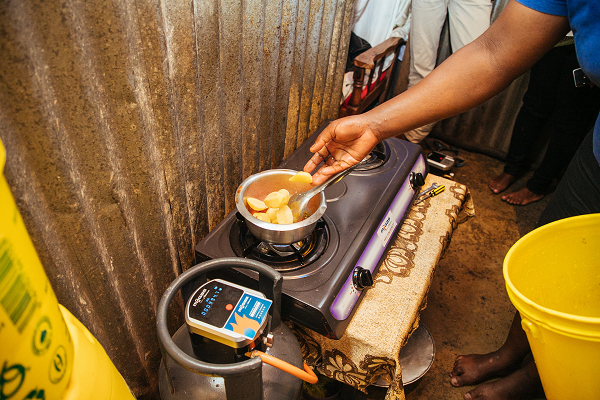
M-Gas operates a pay-as-you-cook LPG model tailored to low-income households. Customers can purchase gas in small increments, starting from as little as Sh10 via M-Pesa. The firm supplies a cylinder and two-burner stove at no upfront cost, removing the barrier of purchasing equipment and refilling a standard 13-kilogramme cylinder, which can exceed Sh6,000.
Its cylinders are fitted with smart meters that monitor usage and automatically shut off once the prepaid amount is exhausted. When levels run low, the system notifies the company, which then delivers a replacement cylinder at no extra charge. The platform runs on Safaricom’s Narrowband Internet of Things network, while TotalEnergies supplies both the LPG and the cylinders.
Also Read: Outstanding NSSF Contributions Climb to Sh5.1bn as Penalties Swell
The carbon credit push comes at a delicate moment for the sector. Scrutiny of clean-cooking carbon projects has intensified following the collapse of Koko Networks. Shortly after M-Gas announced its approval letter, Koko revealed it was shutting down, having failed to secure the necessary letters of authorisation despite a June 2024 investment framework agreement that would have enabled it to sell carbon credits.
Koko, which distributed subsidised bioethanol stoves and fuel to more than 1.5 million low-income households, had depended heavily on carbon credit revenues to offset operating losses. Against that backdrop, M-Gas’s progress will be closely watched as a test of whether Kenya’s carbon market can deliver durable financing for clean energy access without repeating past missteps.