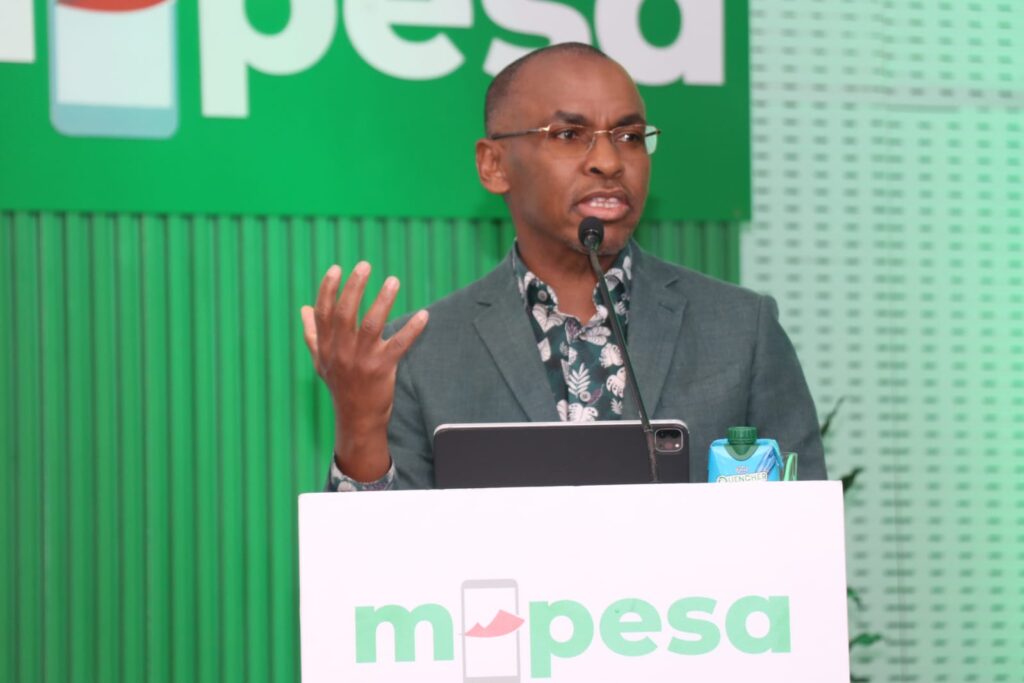
Safaricom recorded its best financial performance since inception, reporting a record attributable profit of KSh 95.61 billion and unveiling the largest dividend payout ever declared by a Kenyan company at KSh 80.13 billion.
The announcement, released on Thursday, triggered a strong market reaction, sending Safaricom shares up 8.42% during the week to close at KSh 32.20. The rally added nearly KSh 100 billion to the telco’s market capitalisation in a single trading session and pushed the Nairobi All Share Index up 2.10% to 209.65 points.
However, the surge in Safaricom masked broader weakness across the market.
The NSE 20 Share Index slipped 0.42%, while the banking sector came under pressure, dragging the Banking Index down 1.74%.
Absa Bank Kenya fell 7.87%, Co-operative Bank of Kenya declined 6.07%, and KCB Group edged lower by 0.37%.
Excluding Safaricom’s gains, the rest of the market shed an estimated KSh 28 billion during the week, creating the widest performance gap this year between the NASI and the Banking Index.
Total market capitalisation rose 2.10% to KSh 3.48 trillion from KSh 3.41 trillion previously.
The NSE 10 Index gained 0.63%, while the NSE 25 advanced 0.58%, both largely supported by Safaricom’s heavyweight influence.
Equity turnover nearly doubled to KSh 4.37 billion from trading in 112.93 million shares. Banking stocks accounted for 61.23% of market activity at KSh 2.6 billion, while telecommunications contributed 27.42%, equivalent to KSh 1.2 billion.
Top Movers
Shri Krishana Overseas emerged as the week’s top gainer after climbing 16.44%.
Crown Paints Kenya rose 11.95%, Car and General gained 9.93%, while Sasini advanced 9.62%.
On the losing side, Flame Tree Group led decliners with a 12.15% drop.
Kenya Airways fell 6.15%, while Nation Media Group shed 5.73%.
Foreign Investors Turn Net Sellers
Foreign investors turned sharply bearish during the week, recording net outflows of KSh 751.19 million after the previous week’s near-balanced position. Monday was the only session that registered net foreign buying.
Foreign participation accounted for 40.84% of total market turnover.
Meanwhile, Kenya’s foreign exchange reserves increased for the first time in nine weeks, rising by US$188 million to US$13.41 billion, equivalent to 5.7 months of import cover.
Also Read: New KCC Records Fourth Straight Loss Despite Higher Farmer Payments
Global oil prices also eased significantly.
Murban crude declined to US$89.13 per barrel from US$100.21, marking the sharpest weekly drop since the onset of the geopolitical crisis and easing pressure on Kenya’s fuel import bill.
Kenya’s Eurobond yields tightened sharply, with average yields compressing by 53 basis points. The 2028 Eurobond yield fell to 7.24%, signalling improving investor sentiment toward Kenya’s sovereign debt.
Treasury Bill Rates Continue Climbing
Treasury bill yields continued their upward trajectory, with the 91-day paper rising to 8.19%, the 182-day holding steady at 8.21%, and the 364-day climbing slightly to 8.52%.
The May 6 government bond auction attracted strong investor demand, recording a 132.5% subscription rate after receiving KSh 106 billion in bids against an offer of KSh 80 billion.
Bond market turnover, however, declined 32.22% to KSh 22.29 billion.
Key Economic Indicators
Kenya’s GDP growth for 2025 was estimated at 4.6%, slightly below the 4.7% recorded in 2024.
Inflation accelerated to 5.60% in April 2026 from 4.40% in March, while the Central Bank Rate remained unchanged at 8.75%.
The Kenyan shilling remained stable at 129.19 against the US dollar.
Corporate Developments
Alongside Safaricom, Stanbic Bank Kenya, Express Kenya, and Shri Krishana Overseas also published audited financial results during the week.
In addition, NCBA Group released official offer documents relating to Nedbank’s proposed acquisition of approximately 66% of NCBA’s issued shares following approval from the Capital Markets Authority.