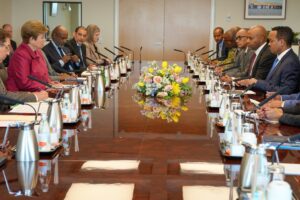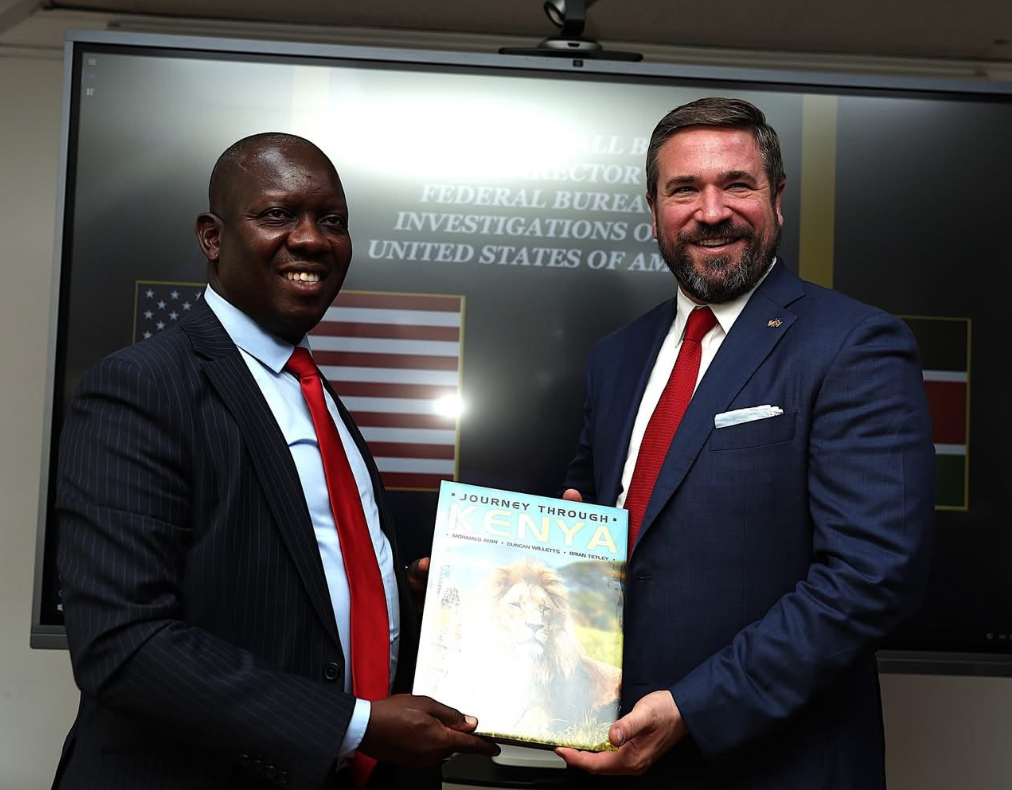
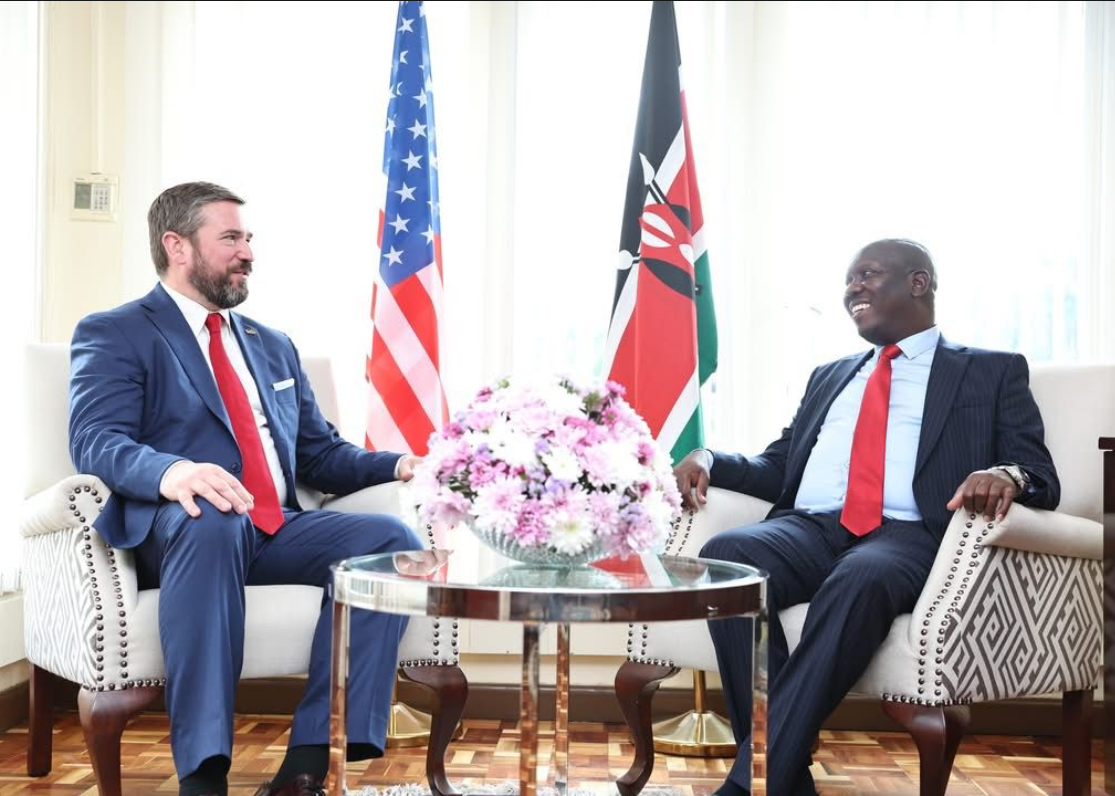
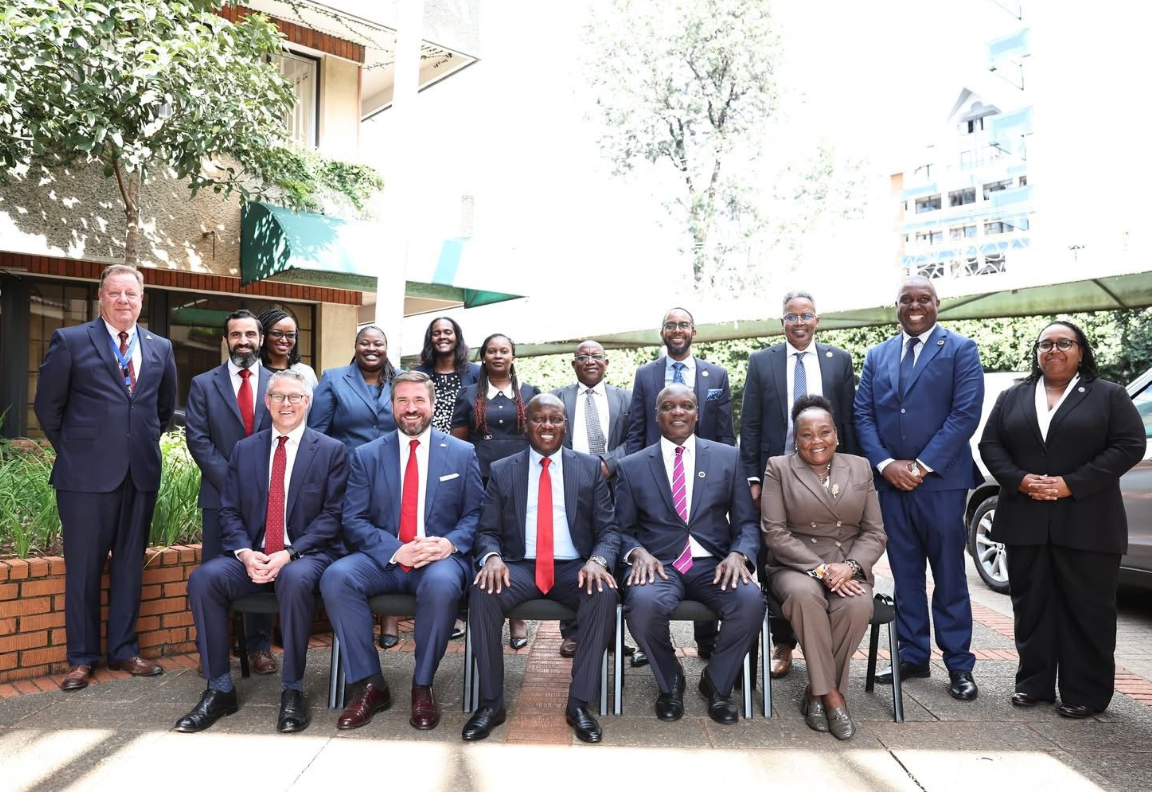
The Director of Public Prosecutions, Renson Ingonga, held high-level talks in Nairobi with visiting United States Federal Bureau of Investigation Deputy Director Andrew Bailey, with the two sides reaffirming Kenya-US cooperation in the fight against transnational organised crime, terrorism, narcotics trafficking and terror financing.
The bilateral meeting brought together senior officials from the Office of the Director of Public Prosecutions (ODPP) and representatives of the United States Department of Justice agencies to discuss strengthening international cooperation, enhancing mutual legal assistance and extradition mechanisms, and reinforcing operational partnerships against increasingly sophisticated criminal networks operating across borders.
Speaking during the meeting, Ingonga said modern criminal enterprises are no longer restricted by national boundaries and require coordinated international responses.
“Crime today is no longer confined by geography. Criminal enterprises operate across jurisdictions, exploit emerging technologies, move illicit funds through formal financial systems and leave behind complex evidentiary trails that demand coordinated international responses,” he said.
Ingonga noted that collaboration between the ODPP and the United States Department of Justice, particularly through the Office of Overseas Prosecutorial Development, Assistance and Training and the Bureau of International Narcotics and Law Enforcement Affairs, has significantly strengthened Kenya’s prosecutorial and investigative capacities.
“The United States Department of Justice has remained a critical and dependable partner to the ODPP, the National Police Service, the Directorate of Criminal Investigations and other criminal justice actors,” he said.
According to Ingonga, the cooperation has helped improve mutual legal assistance processes, extradition practice and Kenya’s response to terrorism, narcotics trafficking and organised criminal activity.
The DPP said the discussions also reviewed progress made under ongoing cooperation frameworks while identifying new areas for collaboration, including asset recovery, financial investigations, cybercrime, counter-narcotics operations and counter-terrorism prosecutions.
He added that recent legal and institutional reforms, including the launch of the ODPP Mutual Legal Assistance Guidelines and the Counter-Terrorism and Countering Financing of Terrorism prosecutorial curriculum, are intended to strengthen Kenya’s ability to respond to evolving transnational criminal threats.
“Our commitment is to ensure that Kenya remains a credible and reliable international justice partner,” Ingonga said.
Bailey praised the long-standing partnership between Kenya and the United States, describing it as a model for international law enforcement cooperation.
“The partnership between Kenya and the United States has produced tangible results in addressing transnational organised crime, counter-terrorism and extradition matters,” Bailey said.
He commended cooperation among the ODPP, the National Police Service, the Directorate of Criminal Investigations and US justice agencies, saying the collaboration had enhanced operational effectiveness and boosted international confidence in cross-border criminal justice cooperation.
“Kenya has demonstrated a strong commitment to international cooperation. Our shared work in disrupting criminal networks, pursuing fugitives, strengthening investigations and advancing prosecutions continues to make an important contribution to regional and global security,” he said.
Bailey also stressed the importance of continued intelligence sharing, joint investigations and coordinated responses to emerging threats, particularly terrorism-linked networks, cyber-enabled crime, narcotics trafficking and illicit financial flows.
The meeting reviewed several joint initiatives undertaken in recent years, including regional anti-narcotics training programmes, counter-terrorism financing workshops, cybercrime training, forensic expert witness programmes and Chemical, Biological, Radiological, Nuclear and Explosives (CBRNE) terrorism workshops.
Officials also acknowledged progress in strengthening mutual legal assistance and extradition frameworks, citing recent extradition cases that have helped shape Kenya’s extradition jurisprudence and enhanced confidence in the country’s international criminal justice cooperation.
The two sides further reflected on joint operational successes in countering narcotics trafficking, terrorism-related activities and organised criminal networks, including investigations involving synthetic drug production, extremist-linked activities and complex mass-fatality cases.
Among the areas identified for future collaboration were strengthening financial investigations and asset recovery, particularly in cryptocurrency tracing and digital asset forfeiture, expanding specialised training in cybercrime and anti-money laundering, supporting implementation of mutual legal assistance and extradition guidelines, and deepening regional anti-narcotics and intelligence-sharing programmes.
Bailey and his delegation were in Kenya from May 6 to May 9, during which they held meetings with various senior government and security officials.
READ ALSO;