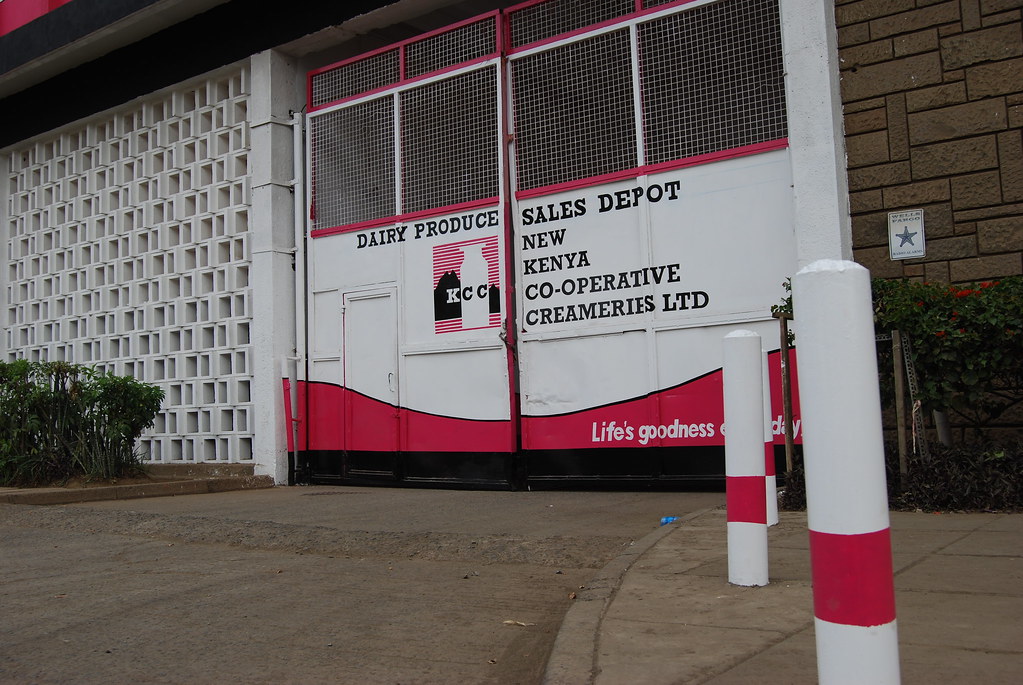
New Kenya Co-operative Creameries (New KCC) purchased 87 million litres of raw milk during the financial year ending June 30, 2025, paying farmers an average of KSh 53.45 per litre and disbursing more than KSh 4.5 billion in payouts, well above President William Ruto’s KSh 50 per litre pricing directive.
Despite the improved farmer payments, the dairy processor still reported a net loss of KSh 953 million, extending its streak of annual losses to four consecutive years.
The company also relied heavily on state support, receiving KSh 2.40 billion in government grants during FY2025, an amount that exceeded its pre-tax loss of KSh 1.44 billion. Auditors further issued a going concern warning for the fourth year running, raising renewed concerns over the firm’s long-term sustainability.
The financial decline predates the recent revenue slowdown.
New KCC last posted a meaningful pre-tax profit in FY2020 when it earned KSh 95 million on revenues of KSh 8.79 billion while maintaining a gross margin of 30.3%.
By FY2021, revenue had climbed to a record KSh 9.46 billion, yet profitability had almost vanished, with pre-tax earnings shrinking to just KSh 2.7 million as gross margins slipped to 26.6%.
Since then, revenues have declined by 22% to KSh 7.35 billion. Over the past four financial years, cumulative pre-tax losses have reached KSh 4.26 billion.
Gross margins deteriorated sharply from 26.6% in FY2021 to just 5.4% in FY2024 as the cost of sales consumed 94.6% of revenue. FY2025 saw only a modest recovery, with margins improving to 15.4%.
Government support has accelerated significantly over the same period.
Cumulative capital grants now stand at KSh 4.55 billion over five years, including KSh 50 million in FY2022, KSh 1.50 billion in FY2024, and KSh 2.40 billion in FY2025.
The pace at which taxpayer support is increasing now exceeds the growth in the company’s reported losses.
Mounting Financial Pressure
Finance costs nearly doubled to KSh 369 million in FY2025 from KSh 192 million the previous year and now consume roughly 32% of the company’s gross profit.
Trade payables rose to KSh 3.98 billion, with KSh 3.24 billion, equivalent to 81%, overdue for more than 120 days.
In FY2023, overdue obligations stood at just KSh 363 million, meaning delayed payables have increased nearly ninefold within two years.
The company also ended the year with a negative net cash position of KSh 248 million.
The Office of the Auditor-General once again issued a qualified audit opinion after identifying a KSh 3.17 billion milk mop-up reserve reflected in equity without a corresponding cash asset on the balance sheet.
Audit records indicated that the funds had already been paid to farmers, yet the associated cash balance could not be traced within the company’s accounts. Eleven unresolved audit concerns from prior years also remain outstanding.
Production Targets Continue to Miss the Mark
For five straight years, New KCC has collected between 82 million and 87 million litres annually, consistently falling short of its budgeted target of 120 to 122 million litres.
This means the processor has only achieved between 68% and 72% of its annual collection targets despite factory commissioning projects, a KSh 5 billion infrastructure programme, and government-backed pricing interventions.
By November 2025, farmers in the Rift Valley were reportedly owed KSh 300 million for milk deliveries dating back four months.
Also Read: DPP Ingonga Meets Visiting FBI Deputy Director Bailey, Discusses Organized Crime Cooperation
At the same time, several government institutions, including the Ministry of Defence, the Administration Police Service, and State House, collectively owed New KCC KSh 184.3 million in unpaid bills.
In November 2025, Cabinet Secretary Wycliffe Oparanya announced that the government was exploring a privatisation plan for New KCC in a bid to address persistent delays in farmer payments.
However, Rift Valley farmers opposed an outright sale, instead proposing that the government’s ownership stake be converted into shares controlled by farmers themselves.
The debate deepened further when former Co-operatives Cabinet Secretary Simon Chelugui contradicted Oparanya weeks later, insisting that a Cabinet resolution passed on March 29, 2019 had expressly exempted New KCC from privatisation and remained legally binding.
As matters stand, the company’s future remains uncertain, with no clear decision yet reached on whether New KCC will ultimately be privatised, restructured, or continue operating under state ownership.