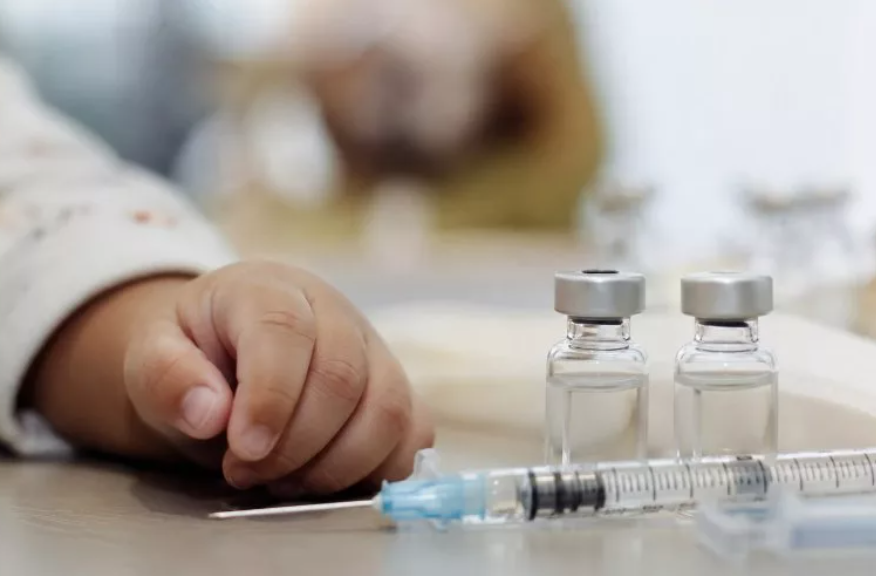
Global childhood immunisation coverage recorded modest gains in 2025, but millions of children remain unvaccinated due to conflict, poverty, displacement and growing vaccine hesitancy, according to new estimates released by UNICEF and the World Health Organization (WHO).
The annual WHO-UNICEF Estimates of National Immunization Coverage (WUENIC) show that 90 per cent of infants worldwide—about 116 million children—received at least one dose of the diphtheria, tetanus and pertussis (DTP) vaccine, while 85 per cent (110 million) completed the recommended three-dose schedule.
Although both indicators improved by one percentage point compared to 2024, global immunisation coverage remains below pre-COVID-19 pandemic levels recorded in 2019.
The report estimates that 13.5 million children received no vaccines at all during their first year of life in 2025, commonly referred to as “zero-dose” children.
This represents about 750,000 fewer children than the previous year, but health experts warn that progress is being undermined by increasing numbers of children who begin vaccination but fail to complete the schedule.
Kenya’s progress
In Kenya, an estimated 135,000 children remained zero-dose in 2025, a figure largely unchanged from 2024.
The country recorded encouraging progress in routine immunisation, with 88 per cent of eligible children receiving all three doses of the DTP vaccine, bringing Kenya close to the global target of 90 per cent coverage.
Kenya also registered significant gains in Human Papillomavirus (HPV) vaccination. Between January and June 2026, the Ministry of Health, with support from UNICEF, WHO and partners, vaccinated 472,845 adolescent girls with at least one HPV vaccine dose, compared to 258,698 girls during the same period in 2025—an increase of more than 80 per cent.
Overall, about 69 per cent of eligible girls in Kenya have now received one dose of the HPV vaccine.
“Immunisation is every child’s right. While we celebrate the success of the expansion of HPV vaccination in Kenya, it also serves as a challenge to redouble our efforts and close the gap to reach zero-dose children,” said Dr. Shaheen Nilofer, UNICEF Representative to Kenya.
Measles outbreaks remain a concern
The report also highlights worrying stagnation in measles vaccination.
Globally, an estimated 7.3 million infants received their first DTP vaccine but failed to receive their first measles vaccine, contributing to measles coverage remaining below the level needed to prevent outbreaks.
Only 84 per cent of children received the first measles vaccine dose, while 77 per cent received the second dose, well below the 95 per cent coverage required for herd immunity.
As a result, 57 countries experienced major measles outbreaks in 2025.
Conflict and misinformation slowing progress
UNICEF Executive Director Catherine Russell said that although countries have made significant strides in restoring vaccination services after disruptions caused by the COVID-19 pandemic, millions of children continue to miss lifesaving vaccines.
“Governments and health workers have helped global vaccination rates bounce back after dropping significantly during the COVID-19 pandemic. But millions of vulnerable children are still being left unprotected due to conflict, displacement, and poverty.
We must reach every child, and we must rebuild trust where it is fraying.”
WHO Director-General Dr. Tedros Adhanom Ghebreyesus described immunisation as one of the world’s most effective public health interventions.
“Every child, whether born into wealth or poverty, peace or conflict, deserves the lifesaving protection that vaccines provide. Immunisation is one of the most cost-effective and equitable interventions for protecting children’s health.”
Funding concerns
The agencies warned that recent reductions in international health financing threaten to reverse years of progress.
They noted a sharp decline in national immunisation surveys used to monitor vaccination coverage, with only 18 surveys completed globally in 2025, compared to 50 in 2024.
WHO and UNICEF cautioned that weaker surveillance and reduced investment in immunisation programmes could lead to preventable disease outbreaks and child deaths.
The agencies are urging governments and development partners to strengthen immunisation services in fragile settings, combat vaccine misinformation, increase domestic and international funding, and invest in stronger disease surveillance and health data systems to ensure every child receives lifesaving vaccines.
READ ALSO;