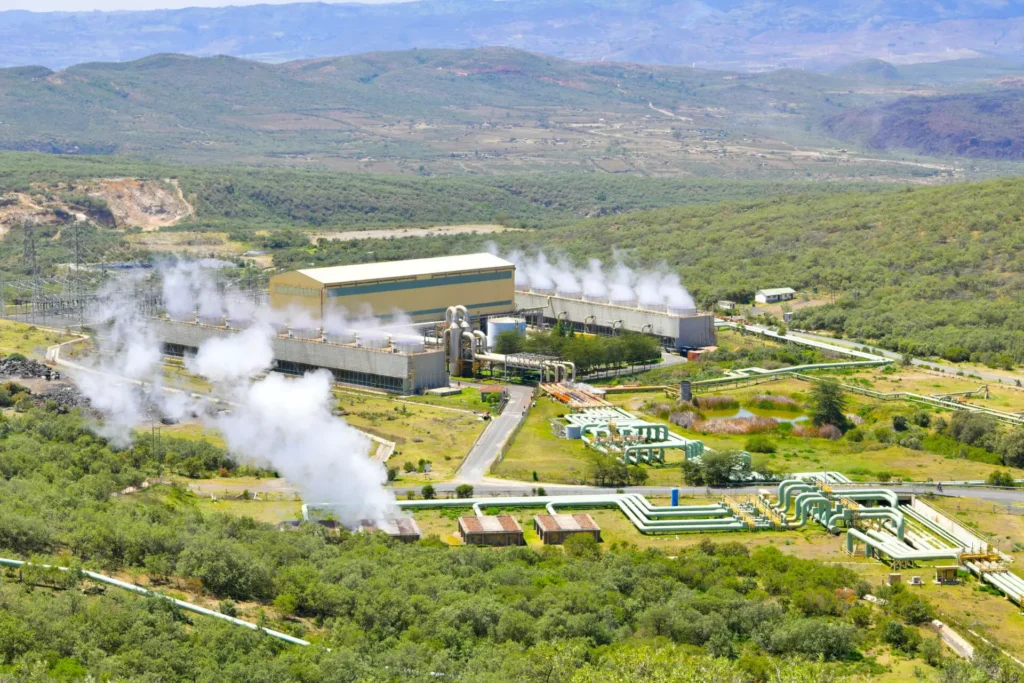
Indonesia’s state-backed energy giant Pertamina, through its geothermal arm PGEO, has withdrawn from plans to develop the Suswa geothermal field, arguing that the expected returns fell short of its investment benchmarks.
PGEO had earlier projected that roughly US$200 million would be required to bring the field into production. The site is estimated to have geothermal potential ranging between 100 and 300 megawatts.
The company had begun engagement with Kenya’s state-owned Geothermal Development Company (GDC) with the signing of a non-disclosure agreement in September 2023, followed by a memorandum of understanding in 2024 aimed at assessing a possible joint development of the resource.
Even with Pertamina stepping away, GDC has pressed ahead with exploration work at Suswa, mobilising drilling equipment and preparing for development in phases.
Speaking to Indonesian media, John Anies, President Director of Pertamina New & Renewable Energy, said the numbers simply did not add up for the firm.
“Once we calculated what they were offering, with the available resources, we felt the investment wasn’t good. So we’ll just look elsewhere, in other, more attractive locations,” he said.
PGEO had also been negotiating a separate arrangement with Africa Geothermal International Limited concerning the nearby Longonot geothermal field.
The Indonesian company typically seeks majority ownership in its overseas geothermal projects, a stance it usually takes after completing thorough due diligence. In the case of Suswa, Pertamina concluded that both the commercial framework and the available resource did not satisfy its internal economic criteria.
Also Read: Kenya Pipeline IPO Clears with 105% Subscription as Institutional Investors Step In
GDC, which has previously spearheaded geothermal projects in Menengai and Baringo-Silali, must now either attract new investors or move forward with the development using local financing.
Suswa has struggled to secure long-term investors in the past. In 2012, the Kenyan government cancelled a 30-year exploration licence that had been awarded to WalAm Energy Inc., a US-Canada-based developer, after the company failed to meet requirements related to drilling, feasibility assessments and environmental compliance.
WalAm later sought compensation through international arbitration. However, in 2020, the tribunal sided with Kenya’s decision, clearing the way for GDC to proceed with plans to develop the geothermal resource.
