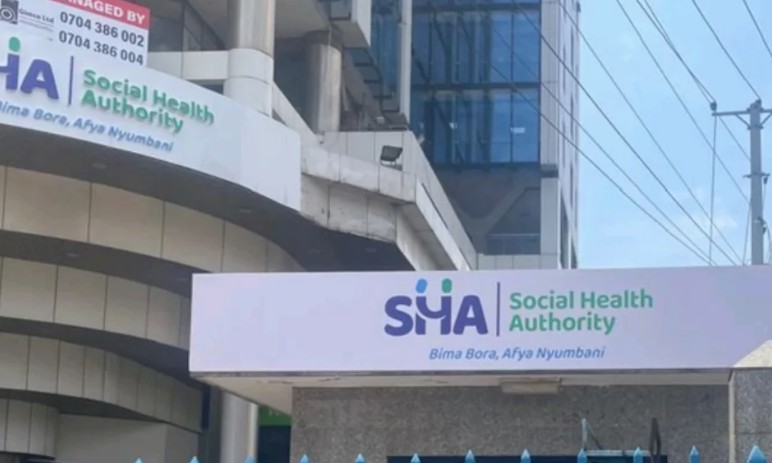
Health insurance remains unevenly distributed across Kenya’s counties, with income gaps, informal work and weak public awareness continuing to blunt coverage, even as the country rolls out the new Social Health Authority (SHA).
Figures from the Gross County Product report show a clear pattern. Counties with higher incomes and stronger formal employment record far higher insurance enrolment, while rural and arid regions are still trailing badly. Urban hubs such as Nairobi, Kiambu and Mombasa lead the pack, buoyed by salaried jobs and employer-backed contributions. On the other end of the scale, northern and parts of eastern Kenya, including Wajir, Mandera and Turkana, post some of the lowest coverage levels, reflecting entrenched poverty and heavy dependence on informal livelihoods. In these areas, people mostly pay for healthcare out of pocket, leaving households dangerously exposed when illness strikes.
The data also highlight how closely insurance uptake tracks income and financial inclusion. Counties with vibrant micro, small and medium enterprises and better access to credit tend to record stronger insurance penetration, reinforcing the link between economic activity and social protection.
Also Read: Digital Lending Keeps Kenya’s Small Firms Afloat as Formal Jobs Thin Out
These imbalances sit behind Kenya’s recent shake-up of its public health insurance system. In late 2024, the government scrapped the National Health Insurance Fund and replaced it with the Social Health Authority, a model designed to widen coverage beyond formal workers and base contributions on ability to pay rather than job status.
Officials insist SHA lays a fairer foundation for universal health coverage. By tying contributions to income and drawing on county-level data, the new framework is meant to sharpen targeting, curb catastrophic health spending and take some of the strain off household budgets as the country pushes towards a more inclusive health system.


